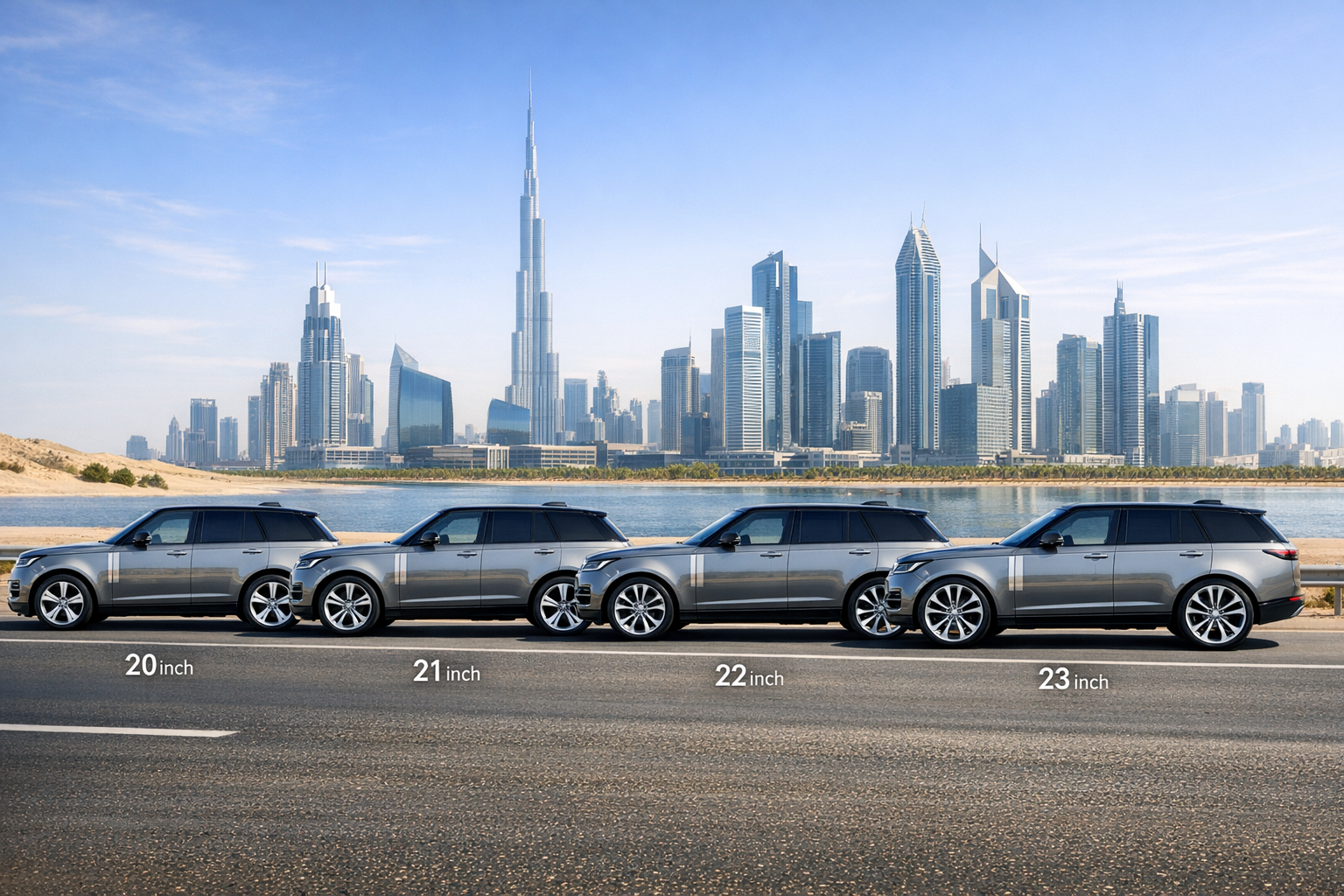
Choosing Range Rover wheels in the UAE goes beyond aesthetics. Scorching summer tarmac, aggressive Dubai speed humps, and weekend desert driving all punish the wrong wheel-and-tyre combination. The size you fit affects ride comfort on Sheikh Zayed Road, tyre prices in Dubai, air suspension longevity, and even your safety during hot-weather highway cruising.
This guide breaks down 20-, 21-, 22-, and 23-inch options with UAE-specific pros, costs, and real-world advice—whether you drive a Range Rover Sport, Autobiography, or the latest fifth-generation model.
Need help choosing the right setup for your driving habits? The team at Euro Expert for Range Rover repair in Dubai can inspect your current wheels, suspension health, and alignment before you commit to a new size.
20-Inch Wheels: The Comfort-First Choice
The 20-inch option delivers the thickest sidewall of the group. In the UAE context, that means superior absorption over speed humps, pothole edges, and unfinished road surfaces common in developing communities across Dubai, Abu Dhabi, and Sharjah.
More rubber between rim and road also helps during hot-weather driving. A taller sidewall dissipates heat more effectively, reducing blowout risk when surface temperatures exceed 70°C in July and August. Tyre replacement costs are the lowest in this category, and stock availability across the UAE is excellent—you’ll rarely wait for supply.
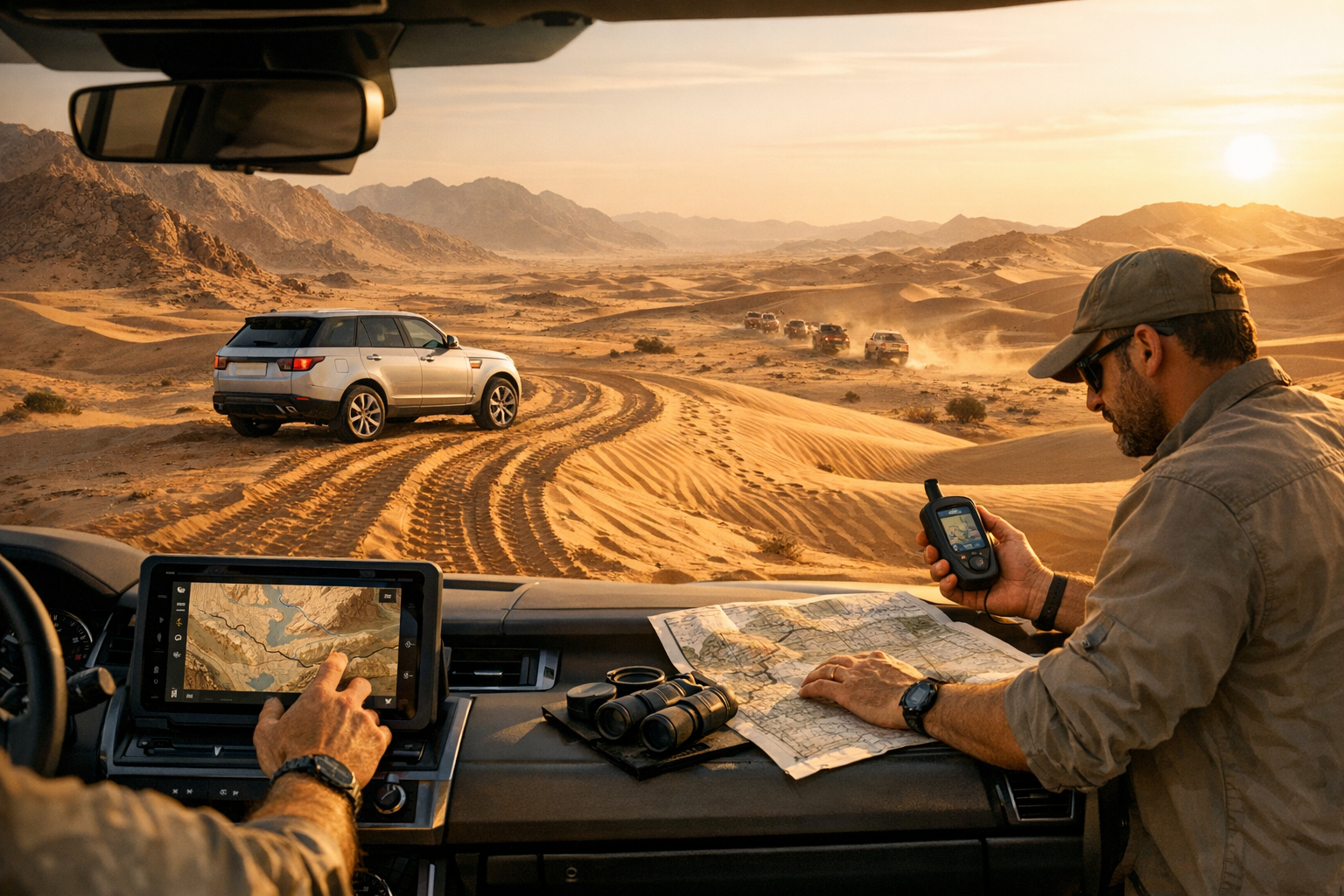
For owners who venture into the desert semi-regularly, the taller sidewall lets you air down more aggressively without risking bead separation. That translates to genuinely improved traction on soft sand dunes near Al Qudra, Fossil Rock, or Liwa.
The trade-off? A less aggressive stance that some owners feel undersells the Range Rover’s road presence.
Best for: Daily commuters, families prioritising highway comfort, frequent off-road sand driving enthusiasts.
Quick Take — 20-Inch
- Typical sizes: 255/55R20 or 275/50R20
- Best for comfort and sand; forgiving over speed humps
- Lowest tyre cost per corner; widest stock availability in Dubai and Sharjah
21-Inch Wheels: The Factory Sweet Spot
Land Rover fits 21-inch wheels as standard or optional on most current Range Rover models—and for good reason. This size is arguably the best all-round compromise for UAE roads and climate.
You still retain a reasonable sidewall (typically around 50–55 profile). That provides adequate cushioning for Dubai’s speed humps while delivering a noticeably sharper look than the 20-inch setup. The visual upgrade is real without crossing into harsh-ride territory.
Tyre availability remains strong. Most major brands—Continental CrossContact, Pirelli Scorpion, Goodyear Eagle—stock UAE-appropriate variants with hot-weather tyre ratings and XL load indices designed for heavy SUVs. Replacement costs sit in a moderate range, and you maintain enough sidewall depth for occasional dune sessions without excessive worry about rim damage.
For the Range Rover Sport or Autobiography driven daily and taken off-road on weekends, this is the size that does both jobs well.
Best for: Owners wanting balanced aesthetics, city comfort, and weekend desert capability.
Quick Take — 21-Inch
- Typical size: 275/45R21
- Balanced comfort and looks; good for occasional dunes
- Broad brand choice with correct load and speed ratings; moderate cost
22-Inch Wheels: The Popular Upgrade
This is where most UAE Range Rover owners land when upgrading. A 22-inch wheel fills the arch convincingly and delivers the premium road presence that suits this market. Drive through JBR, Downtown Dubai, or Abu Dhabi Corniche and you’ll see why it’s the default aftermarket choice.
However, the thinner sidewall introduces compromises worth understanding before you spend.
Ride quality becomes noticeably firmer. Speed humps—particularly the steep, narrow type in older Dubai neighbourhoods and Sharjah residential areas—transmit more impact into the cabin and suspension components. Over time, this accelerates wear on air suspension struts, compressor units, bushings, and electronic dampers. Owners running 22s should schedule suspension diagnostics more frequently.
Tyre costs increase substantially. Fewer budget-friendly options exist in the correct load ratings (typically 109V or higher with XL reinforcement). Hot weather tyre ratings matter more here because thinner sidewalls flex less, concentrating heat differently under sustained highway speeds.
Desert suitability decreases at this size. Airing down on low-profile tyres risks rim contact with rocks, and reduced sidewall flex makes sand driving less forgiving. If you only visit the desert once or twice a year, it’s manageable with caution. If you go monthly, reconsider.
Best for: Primarily road-driven vehicles where appearance is a high priority.
Quick Take — 22-Inch
- Typical size: 285/40R22
- Sharper, more commanding look; firmer ride over imperfections
- Higher tyre prices; increased air suspension wear; mind speed humps and potholes
Concerned about air suspension wear on 22s? A quick wheel alignment and strut health check at Euro Expert can catch problems before they become expensive failures.
23-Inch Wheels: Statement Pieces with Real Trade-Offs
The 23-inch option is available on the latest Range Rover generation. It looks spectacular. It also demands the most careful consideration in the UAE’s extreme climate.
Ultra-low-profile tyres (typically 35 or 40 series) offer minimal cushioning. Every expansion joint, manhole cover, and speed hump registers clearly in the cabin. Rim damage from potholes is a genuine and expensive risk—a single kerb strike can crack a forged alloy that costs thousands of dirhams to replace.
Tyre availability in the UAE is more limited than smaller sizes. Replacement costs are significantly higher, and the heat factor cannot be ignored. Thinner sidewalls are more susceptible to blowouts when running on sun-baked tarmac at 120 km/h during summer months. The margin for error on tyre pressure shrinks.
Desert driving is essentially off the table. Even moderate airing-down risks bead separation or rim-to-rock contact. These are city and highway wheels.
Best for: Garage-kept show vehicles, low-mileage weekend drivers, or owners who fully accept higher maintenance costs for maximum visual impact.
Quick Take — 23-Inch
- Typical size: 285/35R23
- Maximum road presence; head-turning aesthetics
- Minimal cushioning; limited UAE stock; highest cost per corner; no desert capability
Suspension Health Matters Regardless of Size
Whichever wheel size you choose, UAE driving conditions place considerable stress on Range Rover suspension systems. Air struts, compressors, and electronic dampers work harder in extreme heat and over repetitive impacts from speed humps, construction plates, and rough secondary roads.
Regular inspection is essential—especially if you’re running 22s or 23s where reduced sidewall protection transfers more energy directly into suspension components. Early signs of trouble include uneven ride height, compressor running longer than usual, or a nose-dive sensation under braking.
Wheel alignment also drifts faster in the UAE due to road surface irregularities and heat-induced component expansion. Misalignment accelerates tyre wear unevenly, costing you money on premature replacements regardless of wheel size.
For professional air suspension diagnostics in Dubai, alignment checks, and any Range Rover maintenance related to wheel and tyre setups, Euro Expert can assess whether your current configuration is causing premature wear and advise on corrections.
The Verdict
For most UAE-based Range Rover owners, 21-inch wheels represent the smartest long-term choice. They balance aesthetics with the realities of local roads, hot-weather tyre ratings, and occasional desert use.
If off-road sand driving is frequent—every weekend or more—step down to 20s for maximum sidewall protection and better airing-down capability.
If appearance is paramount and you accept higher running costs and a firmer ride, 22s deliver the look without the extremes of 23-inch compromises.
If you want the ultimate statement piece and drive primarily on smooth highways, 23s exist for that purpose—just budget accordingly.
Choose with your driving habits, not just your eyes.
Ready to fit new wheels or check whether your current setup is causing hidden suspension damage? Book a Range Rover inspection at Euro Expert in Dubai for alignment, tyre assessment, and full air suspension diagnostics tailored to UAE conditions.
Frequently Asked Questions
Are 22-inch wheels bad for Dubai’s speed humps?
They’re not catastrophic, but they’re noticeably harsher. The reduced sidewall (typically 40-profile) cushions less than a 21-inch setup. Over hundreds of daily speed hump impacts, you’ll feel more cabin vibration and put greater strain on air suspension struts and bushings. If your daily route includes many humps—common in Jumeirah, Mirdif, and Sharjah residential zones—a 21-inch wheel with a 45-profile tyre is significantly more forgiving.
What tyre pressures work for desert driving on 20- vs 21-inch wheels?
For sand driving, most experienced UAE off-roaders air down to 18–22 PSI on 20-inch tyres (e.g., 275/50R20), which gives excellent flotation and traction. On 21-inch wheels (e.g., 275/45R21), you can typically drop to 20–24 PSI safely, though the shorter sidewall means less ground-conforming flex. Below 18 PSI on a 21-inch setup, bead separation risk increases. Always re-inflate to road pressures (typically 36–40 PSI depending on load) before hitting tarmac again.
Do 23-inch wheels increase tyre and suspension wear in UAE heat?
Yes, measurably. The ultra-low-profile tyres (285/35R23) absorb less impact, transferring forces directly into suspension arms, air springs, and dampers. In UAE summer heat—where tarmac surface temperatures exceed 70°C—these components already operate under thermal stress. Combined with repetitive speed hump impacts, owners of 23-inch setups typically see air suspension repairs earlier in the vehicle’s life. Tyre sidewalls also run hotter with less mass to dissipate heat, increasing blowout risk if pressures aren’t monitored carefully.
Which tyre load and speed ratings suit a Range Rover in the UAE?
For any Range Rover (kerb weight typically 2,300–2,600 kg), look for tyres with a minimum load index of 109 (1,030 kg per tyre) and XL (extra load) reinforcement. Speed ratings of V (240 km/h) or W (270 km/h) are standard for highway driving here. Brands like Pirelli Scorpion Zero, Continental CrossContact LX Sport, and Goodyear Eagle F1 SUV all offer UAE-stocked variants meeting these specs across 20- to 22-inch sizes. For 23-inch, options narrow to premium brands only.
Is 21-inch the best factory size for both city roads and weekend dunes?
For most owners, yes. The 21-inch wheel with a 275/45R21 tyre provides enough sidewall to absorb Dubai speed humps comfortably, enough rubber to air down for occasional desert trips, and enough visual presence to complement the Range Rover’s proportions. It’s the size Land Rover engineers optimised for, which also means ride height sensors, speedometer calibration, and suspension geometry all remain at factory specification without recalibration.
How often should I check wheel alignment in the UAE?
Every 10,000 km or six months—whichever comes first. UAE roads cause alignment drift faster than milder climates due to speed hump frequency, construction zone surfaces, and thermal expansion of suspension components. Misalignment on a Range Rover shows up as uneven inner-edge tyre wear, slight steering pull, or off-centre steering wheel position. Catching it early saves hundreds of dirhams in premature tyre replacement.