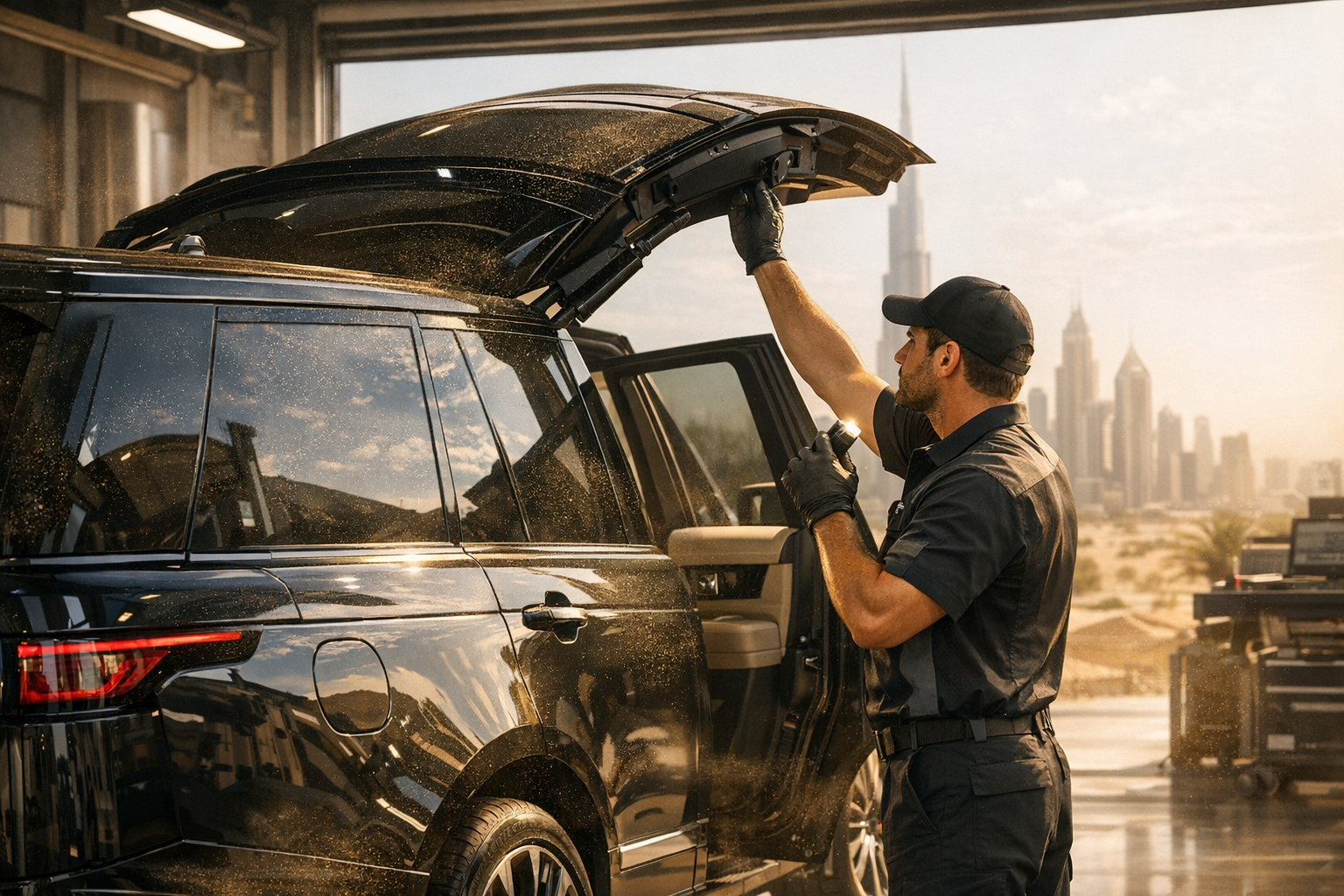
Owning a Range Rover in the UAE means having one of the most sophisticated chassis systems ever fitted to a production vehicle. Yet most owners leave Terrain Response in Auto and never think about ride height again—until a cracked air spring or premature tyre wear sends them to a specialist for Range Rover suspension repair in Dubai like Euro Expert for repairs that could have been delayed or avoided entirely.
Below you will find the right Range Rover Terrain Response settings and air suspension height pairings for every surface you actually encounter between Dubai, Abu Dhabi and Sharjah—no dunes required.
Understanding What You’re Working With
Terrain Response adjusts throttle mapping, transmission behaviour, differential lock strategy and stability control calibration. Air suspension independently controls ride height and damping firmness. Together they form a system, but they respond to different inputs. Choosing the right pairing for a given surface means less mechanical stress, better tyre life and a noticeably more comfortable cabin.
What’s the Best Terrain Response and Ride Height for UAE Highways?
At a glance: Use Dynamic or Auto at standard or lowered height for stability and fuel efficiency above 100 km/h.
- Mode: Dynamic or Auto
- Ride Height: Standard or Access (lowered)
At sustained speeds above 100 km/h on Sheikh Zayed Road, the E11 or the Abu Dhabi–Dubai corridor, the vehicle will usually lower itself automatically to reduce aerodynamic drag. If you select Dynamic mode the dampers firm up, body roll decreases and steering weight increases—ideal for long, straight motorway stints where stability matters more than cushioning. Fuel consumption drops slightly too, thanks to reduced frontal area.
Tip: If your vehicle doesn’t auto-lower above 105 km/h, have the height sensors checked. A faulty sensor can keep the body at off-road height, increasing fuel use by as much as five percent and accelerating wear on suspension bushings. Book a quick height-sensor check at a Range Rover suspension repair specialist in Dubai like Euro Expert to rule out sensor drift before it causes bigger problems.
How Should I Set Up for Dubai Speed Humps and Compound Roads?
At a glance: Auto mode, raise one step (+25 mm), then return to standard height after the zone.
- Mode: Auto (or Comfort where available)
- Ride Height: Standard or one increment above (Off-Road 1 / +25 mm)
Dubai’s residential streets are infamous for aggressive speed humps spaced every 100–200 metres. Raising the air suspension settings one click before entering a compound zone gives you extra wheel travel to absorb impacts without bottoming out the dampers. Auto mode keeps the drivetrain relaxed and responsive at low speed—widely considered the best mode for Dubai speed humps.
After clearing the zone, tap the height back down. Driving continuously at raised height on smooth tarmac accelerates air-spring fatigue because the bellows sit at a less optimal extension angle.
What’s the Right Mode for Gravel Service Roads in the UAE?
At a glance: Grass/Gravel/Snow at Off-Road 1 height protects underbody trim and improves traction on loose surfaces.
- Mode: Grass/Gravel/Snow (Terrain Response) or Auto with traction control sensitivity reduced
- Ride Height: Off-Road 1 (+25 mm)
Newly developed areas around Dubai South, Tilal Al Ghaf and parts of Yas Island still feature compacted gravel access roads. The Grass/Gravel/Snow programme softens throttle response and allows slight wheel slip before stability control intervenes—exactly what gravel service roads in the UAE demand. Raised height protects the lower bumper valance and gives stones less chance of chipping wheel-arch liners.
Which Settings Help in UAE Rain and Flooded Underpasses?
At a glance: Mud & Ruts at maximum height; do not exceed the rated wading depth.
- Mode: Mud & Ruts (if available) or Auto
- Ride Height: Off-Road 2 / Extended (+50 mm or maximum)
UAE rain events are brief but intense, and underpasses flood within minutes. Maximum ride height keeps intake and electronic modules above splashing water. Mud & Ruts mode locks the centre differential early and manages wheelspin aggressively—helpful on slick, painted road markings and oily tarmac when standing water covers Dubai roads without warning.
Critical reminder: Even at maximum height, most Range Rovers have a wading depth of roughly 900 mm. If water reaches mid-door, stop and reverse. Hydrolocking an engine is catastrophic and never covered under standard warranty.
When Should I Use Eco Mode in Dubai Traffic?
At a glance: Eco mode smooths throttle tip-in and reduces transmission heat in stop-and-go summer traffic.
- Mode: Eco
- Ride Height: Standard (auto-lowered when possible)
Eco mode isn’t just for environmentalists. It tempers the aggressive throttle tip-in common in supercharged and twin-turbo V8 models, making stop-and-go traffic along Al Khail Road or Saadiyat Island far less jerky. It also encourages earlier upshifts, which reduces heat build-up in the transmission during summer months when ambient temperatures exceed 45 °C.
How Do I Protect the Air Suspension System Long-Term?
Air suspension components have a finite life. Heat, dust ingress and incorrect ride-height usage accelerate wear. A few habits help:
- Park at Access height in your garage to relieve compressor duty overnight.
- Cycle through all heights at least once a month to keep valve seals lubricated.
- Address warning messages immediately. A slow leak today becomes a dead compressor next month.
- Avoid leaving the vehicle at maximum height on flat tarmac for extended periods—this stretches bellows beyond their designed resting angle and shortens air spring life.
When service is needed, choose a facility that understands Land Rover-specific diagnostics and carries OE-grade parts for air suspension settings and calibration work specific to UAE climate conditions.
Frequently Asked Questions
Can I leave Terrain Response in Auto all the time in Dubai?
Yes, but switching to Dynamic on highways and Grass/Gravel/Snow on loose surfaces usually improves stability and traction compared with leaving it in Auto permanently.
What’s the best mode for Dubai speed bumps?
Auto or Comfort with one-step raised height (+25 mm) helps absorb sharp impacts without bottoming out the dampers. Lower back to standard once you clear the zone.
Should I use Mud & Ruts on wet tarmac?
In sudden storms or on slick, painted road surfaces, Mud & Ruts can reduce wheelspin and improve confidence. Switch back to Auto or Dynamic once roads dry.
Does raised height wear out air springs faster?
Continuous high ride height on smooth tarmac can accelerate bellows wear. Use raised height only when road conditions demand it, then return to standard.
Where can I fix air suspension issues in Dubai?
Book a diagnostic at Euro Expert—a dedicated Range Rover suspension repair specialist in Dubai. Their team handles air spring replacement, compressor overhaul, height-sensor recalibration and full system diagnostics.
Final Thought
You paid for a remarkably capable chassis. Using the correct Range Rover Terrain Response settings and air suspension height on everyday UAE roads is the simplest way to ride better, wear less rubber and arrive safer—every single trip.
For any warning lights, sagging corners or harsh ride quality in Dubai, Abu Dhabi or Sharjah, book a same-day check at Euro Expert—Range Rover suspension repair in Dubai. Their team handles air spring replacement, compressor overhaul and height-sensor recalibration so your Range Rover rides exactly as Solihull intended.