Step-by-step cleaning, conditioning, and replacement guidance for door and window weatherstrips—engineered for UAE heat, UV, and desert sand.
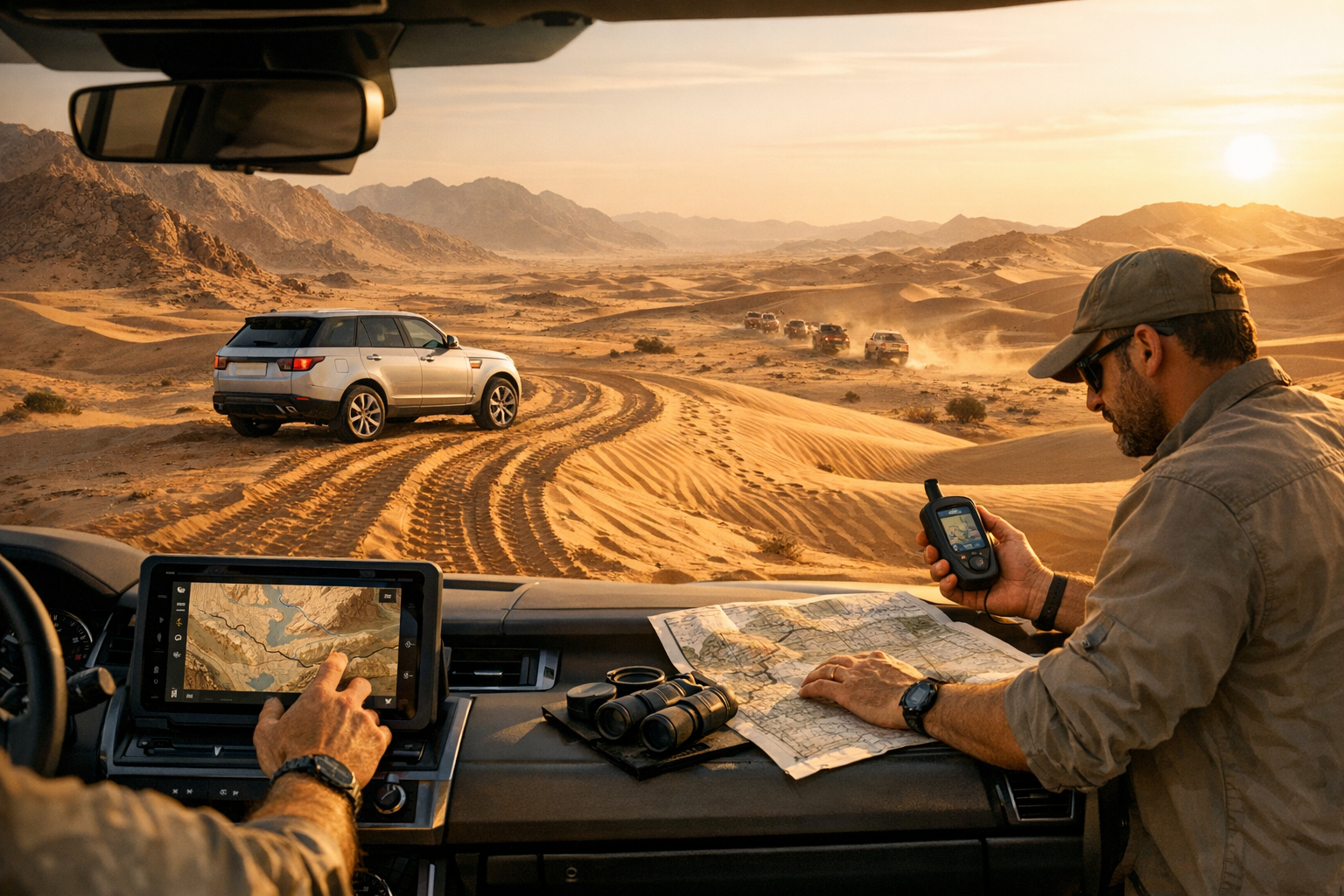
Range Rover owners in Dubai and across the UAE face brutal conditions—extreme heat, UV radiation, and fine desert sand—that quickly degrade door and window seals. These rubber weatherstrips are your cabin’s first defence against dust ingress, wind noise, and rising interior temperatures. Left unchecked, cracked or flattened door rubber lets sand settle on your dashboard, creates an annoying wind whistle at highway speeds, and forces your AC to work harder. The good news: with a simple, regular routine you can prevent dust ingress, eliminate wind noise, and protect rubber so your cabin stays quiet, clean, and cool year-round. This guide covers everything from inspection to conditioning schedules tailored specifically for Dubai’s climate.
How UAE Heat and UV Damage Weatherstrips
Rubber compounds are formulated to stay flexible across a temperature range, but Dubai pushes them past their limits. Summer surface temperatures regularly exceed 48 °C on exposed bodywork, and UV intensity remains high for roughly ten months of the year. Together, heat and ultraviolet light break polymer chains within the rubber, causing progressive hardening and micro-cracking.
What makes the UAE especially destructive is the daily thermal shock cycle. A Range Rover Sport, Vogue, or Velar parked in an open lot absorbs intense radiant heat, then cools rapidly inside an air-conditioned garage at night. This repeated expansion and contraction accelerates fatigue in every door seal, window channel strip, and tailgate seal—often well before the manufacturer’s expected service life.
Add airborne sand particles to the equation and you introduce a constant abrasive. Every time a door opens or closes, fine grit grinds against the seal’s contact lip. Over months, the lip wears thin, gaps develop, and what was once a tight closure becomes a pathway for dust and NVH (noise, vibration, harshness) problems.
Quick Quarterly Inspection Checklist
A quarterly visual and tactile inspection catches problems early—before dust ingress or wind noise become obvious. Run your fingers along each seal on all four doors, the tailgate, and the window channels. Check for:
- Cracks or splits – Focus on fold lines where the seal compresses against the body.
- Hardening – Rubber that should feel pliable now feels stiff or brittle to the touch.
- Flattening – The seal no longer rebounds to fill the gap when the door is closed.
- Visible gaps – Look for sections that have pulled away from the body panel, often where retaining clips have loosened or broken.
- Grit accumulation in window channels – Sand trapped here increases friction on the glass and can damage window regulators over time.
If any section shows advanced cracking or permanent compression set, replacement with OEM seals is the correct response rather than further conditioning.
Clean First: Safe Products and Methods
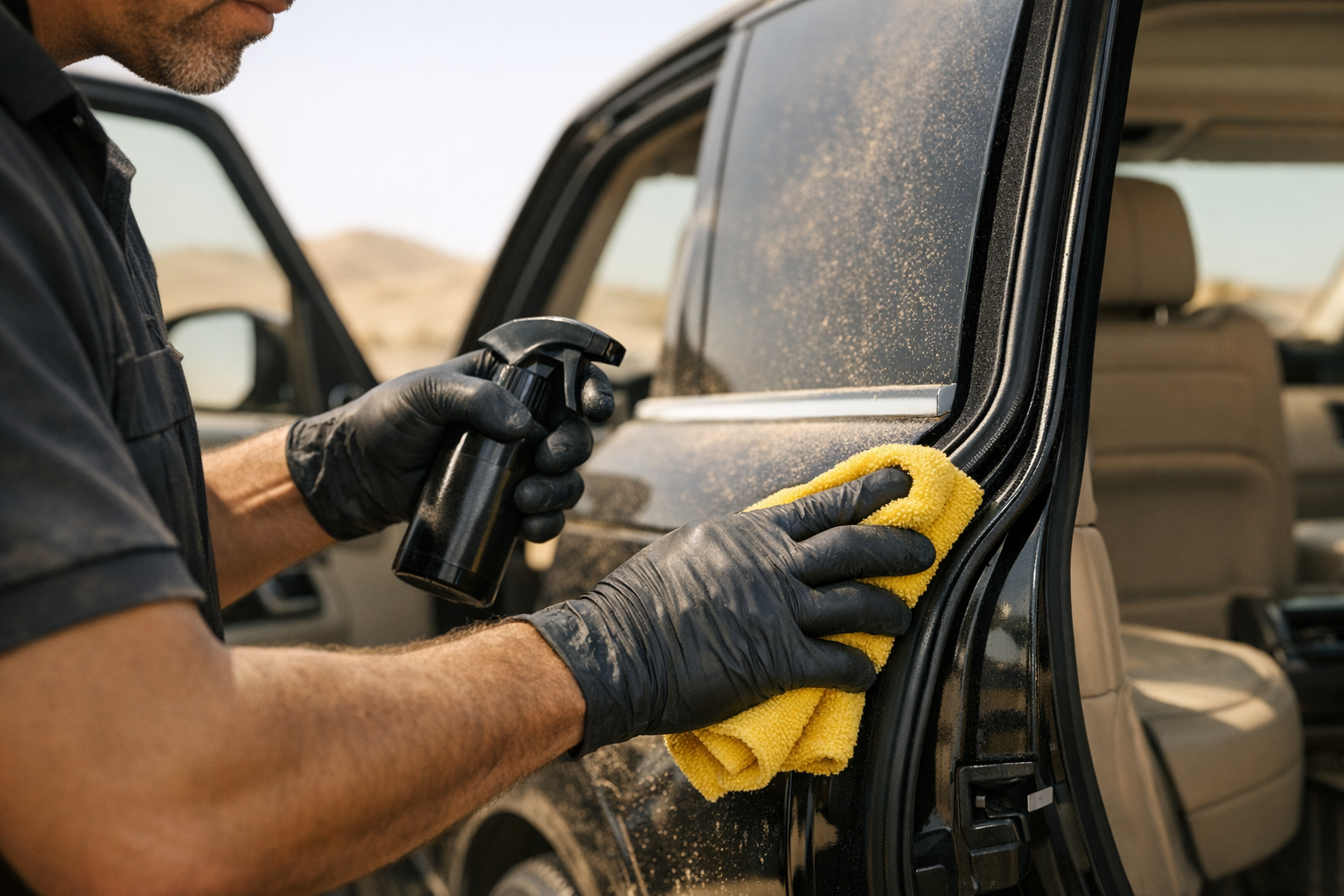
Before applying any protectant, every weatherstrip must be thoroughly cleaned. Desert dust embeds itself in the rubber’s surface texture; conditioning over grit simply locks abrasive particles against the seal.
- Wipe down – Use a damp microfibre cloth to lift loose dust from each door seal and window channel.
- Apply cleaner – Choose a mild, pH-neutral formula. Avoid petroleum-based solvents that strip natural oils from rubber.
- Agitate gently – Work the cleaner into textured areas and the folds of double-lip seals with a soft detailing brush.
- Rinse – Go over the seal with a lightly dampened cloth to remove residue.
- Dry completely – Allow seals to air-dry before conditioning. Trapped moisture under a protectant layer promotes mildew.
Cleaning window channels during this process also reduces friction on the glass, protecting regulators and ensuring smooth operation.
Conditioning Schedule for Dubai Climate
Once clean and dry, apply a silicone-based rubber conditioner or a dedicated weatherstrip treatment such as a glycerin stick or silicone grease designed for automotive seals. These products restore surface pliability, create a UV-resistant barrier, and reduce friction so doors close and seal smoothly.
How to Apply
- Spread a thin, even coat using a foam applicator pad.
- Pay special attention to compression zones—the areas that press against the door frame or body when closed.
- Allow ten to fifteen minutes of absorption time.
- Lightly buff away excess with a clean microfibre to prevent transfer onto clothing or paintwork.
Frequency: For Dubai conditions, conditioning every six to eight weeks delivers the best balance between UV protection and practicality. Owners who park outdoors daily may benefit from a monthly schedule during peak summer (June–September).
Replace vs Recondition: When to Switch
Conditioning extends seal life significantly, but it cannot reverse structural failure. Use this decision framework:
| Condition | Action |
|---|---|
| Light surface dryness, no cracks | Clean and condition |
| Minor surface cracking, still pliable | Condition more frequently; monitor closely |
| Deep cracks, hardened rubber, permanent flattening | Replace with OEM weatherstrip |
| Seal detached from retaining channel or clips broken | Professional refitting or replacement |
OEM seals for Range Rover models are precision-moulded to match factory body gaps. Aftermarket alternatives may appear similar but often differ in durometer (hardness) or profile, leading to continued wind whistle or dust ingress.
Professional Seal Alignment and Replacement in Dubai
If you notice persistent wind noise above 100 km/h despite clean, conditioned seals—or if dust continues to appear on interior surfaces—the issue likely goes beyond the rubber itself. Common underlying causes include:
- Door hinge wear or striker misalignment – Creates uneven compression across the seal.
- Body gap variation – Even minor panel shifts after off-road use can open pathways for air and dust.
- Window channel distortion – Warped channels prevent glass from sitting flush against the upper seal.
Range Rover door systems on the Sport, Vogue, and Velar are precisely engineered. Restoring factory-level sealing often requires specialist knowledge of body gaps, clip systems, and hinge or striker adjustment procedures.
If wind noise or dust persists, book a professional inspection and OEM weatherstrip replacement at Euro Expert—specialists in Range Rover repair in Dubai. Their technicians diagnose NVH issues using factory methods and fit genuine Land Rover seals to restore your cabin’s original quiet and dust-free environment. Schedule a seal inspection today.
Frequently Asked Questions
How often should I condition Range Rover door seals in Dubai?
Every six to eight weeks due to the combination of extreme heat and intense UV exposure; monthly if you park outdoors all day during summer.
Silicone spray or glycerin for weatherstrips?
Use a silicone-based conditioner or glycerin stick; avoid petroleum-based products, which degrade rubber over time.
Why do I still hear wind noise above 100 km/h?
Likely a door alignment issue or permanently flattened seals—inspect body gaps, retaining clips, and hinge/striker adjustment.
Can dusty window channels damage regulators?
Yes, grit trapped in the channels increases friction on the glass, straining the regulator motor and shortening its lifespan. Clean channels every time you condition door seals.
A Small Investment with Outsized Returns
Seal care takes less than thirty minutes per session and costs virtually nothing compared to the interior detailing, sound-deadening retrofits, or compressor strain that neglected weatherstrips eventually demand. In a climate as extreme as the UAE’s, this simple routine keeps your Range Rover’s cabin the quiet, dust-free sanctuary it was designed to be—regardless of what the desert throws at it.