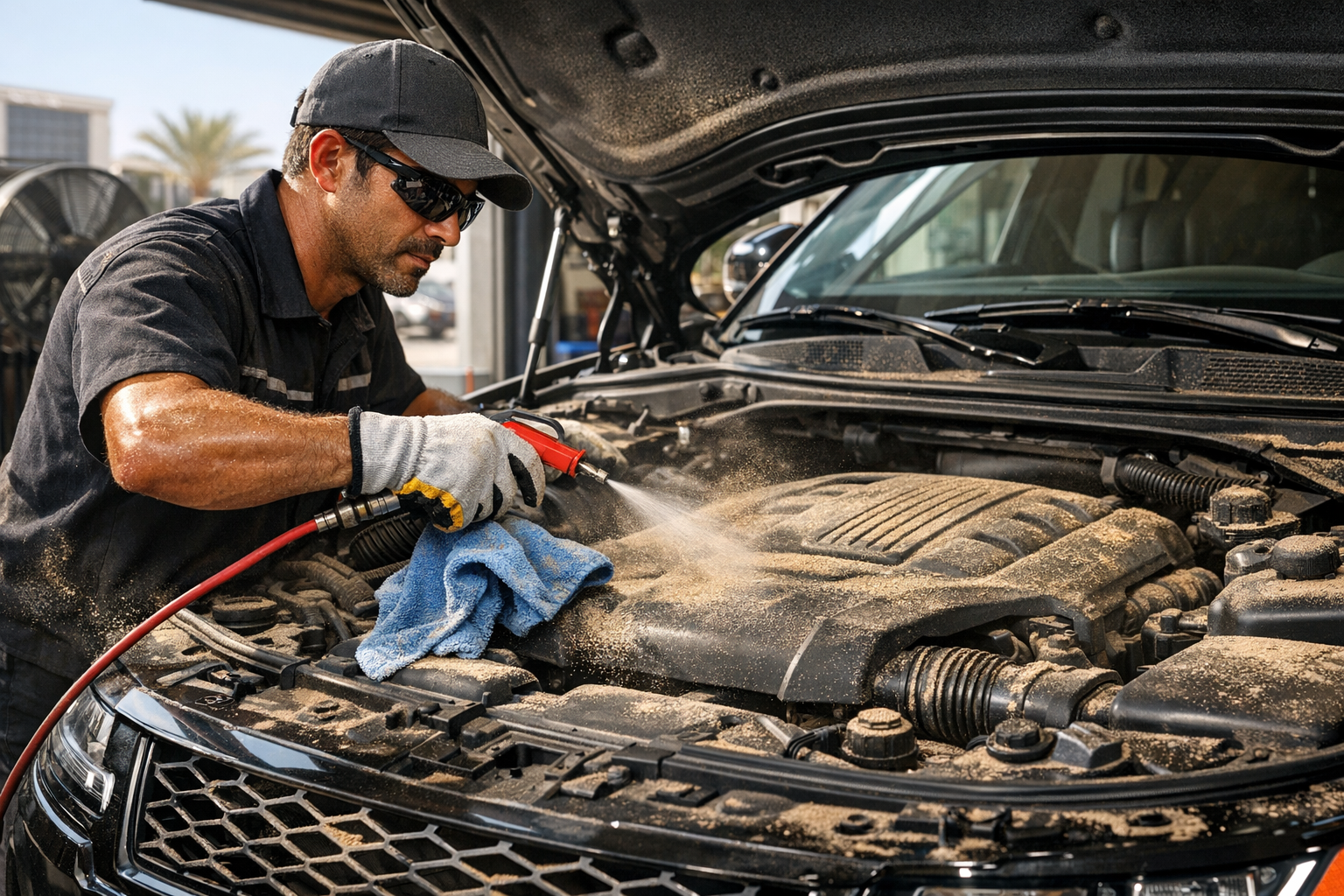
Range Rover engine bay cleaning in Dubai demands more than a quick rinse. The UAE’s desert sand, extreme summer heat, and coastal humidity create a uniquely hostile environment for the densely packed, sensor-rich compartments found in modern Range Rovers. Whether you drive a Sport, Vogue, or Velar, engine detailing in these conditions isn’t just cosmetic—it’s preventive maintenance that protects electrical connections, extends component life, and helps you avoid mysterious fault codes triggered by nothing more than accumulated grit.
If you prefer a professional engine bay clean in Dubai, book with Range Rover repair specialists at Euro Expert. Otherwise, here’s a practical guide to keeping your engine compartment clean, protected, and fault-free.
Why UAE Sand and Heat Damage Range Rover Engine Bays (Dubai/Abu Dhabi)
Desert sand in the Gulf region is exceptionally fine—often below 100 microns—which means it bypasses most factory seals and settles into every crevice. Once inside the engine bay, it acts as an abrasive paste when combined with oil mist or condensation. Over a single summer, unchecked sand accumulation can:
- Wear through wire loom insulation
- Pack into connector housings and cause intermittent sensor faults
- Clog secondary air passages and breather valves
- Accelerate corrosion on aluminium brackets and heat shields
Add sustained under-bonnet temperatures that can exceed 100°C near exhaust manifolds, and you have an environment where cheap protectants break down within weeks and standard plastic dressings turn into sticky dust magnets. Dubai and Abu Dhabi drivers face these conditions year-round, making a structured cleaning routine essential rather than optional.
Step-by-Step: Safe Range Rover Engine Bay Sand Removal
1. Cool the engine first
Never clean a hot engine bay. Allow at least 30–45 minutes after driving, or work early in the morning before the car has been started. Thermal shock can crack plastic covers and damage sensitive components.
2. Cover critical electrical components
Use purpose-made waterproof bags or cling film secured with rubber bands over the main fuse box, ECU housing, alternator, and any exposed air intake openings. On current-generation Range Rovers, pay particular attention to the battery management module and the infotainment system’s wiring harness near the bulkhead.
3. Use low-pressure compressed air first
Before introducing any liquid, blow loose sand away from connector blocks, coil packs, and the valley between the cylinder banks. This single step prevents the majority of abrasion damage that occurs when wet sand is agitated with a brush.
4. Apply a dedicated engine degreaser
Choose a water-based, biodegradable formula rated for high temperatures. Spray it on all hard surfaces, avoiding direct saturation of wiring. Allow it to dwell for three to five minutes.
5. Rinse with low-pressure water
A garden hose with a gentle spray pattern is safer than a pressure washer. Direct the flow downward, working from the back of the bay toward the front, encouraging water to drain naturally through the factory drainage channels.
6. Dry thoroughly
Use compressed air again to chase water out of connector housings and crevices. In the UAE’s summer, you can leave the bonnet open for 15 minutes and ambient heat will handle the rest—but don’t rely on this alone for recessed areas.
Heat-Resistant Protection for Dubai Summers: Dressings and Dielectric Grease
Once clean, apply a silicone-free, high-temperature dressing designed for under-bonnet use. Products rated above 200°C will not break down or become tacky in Gulf summer conditions. A thin, even coat on plastic covers, hoses, and rubber grommets repels dust and prevents UV-driven brittleness.
For electrical connectors, a dielectric grease applied with a small brush creates a moisture and sand barrier inside each housing. This is one of the most overlooked yet effective steps for preventing the random sensor faults—ABS, air suspension, and parking brake warnings—that plague Range Rovers operating in sandy environments across Dubai and Abu Dhabi.
Recommended Engine Bay Cleaning Routine for UAE Conditions
| Frequency | Task |
|---|---|
| Every two weeks | Quick compressed-air blow-down to remove surface sand |
| Monthly | Full wash and protection cycle as described above |
| Every six months | Professional inspection of wire looms, hose condition, and coolant connections |
When to See a Range Rover Repair Specialist in Dubai
If you notice persistent warning lights, white residue around coolant connections, or brittle wiring insulation, it’s time for a specialist inspection rather than another DIY clean. The team behind Range Rover repair in Dubai – Euro Expert understands the specific failure patterns that UAE conditions cause in Range Rover engine bays. From diagnosing sand-induced sensor faults to replacing heat-damaged loom sections, having a dedicated specialist ensures problems are caught before they cascade into costly failures.
FAQ: Range Rover Engine Bay Care in the UAE
How often should I clean my Range Rover engine bay in Dubai?
In sandy, high-heat conditions, blow out loose sand every two weeks and perform a full low-pressure wash and protection monthly. Inspect looms and hoses every six months.
Is pressure washing safe for a Range Rover engine bay?
Avoid high pressure. Use low-pressure water after blowing out dry sand. Cover fuse boxes, ECU, alternator, and air intakes, and dry connectors with compressed air afterward.
What products withstand UAE heat in an engine bay?
Use water-based degreasers and silicone-free dressings rated 200°C or higher. Apply dielectric grease to connector housings to block sand and humidity infiltration.
Final Thought
Engine bay care in the UAE isn’t about show-car aesthetics—it’s about preserving the electrical integrity and mechanical reliability of a vehicle that was engineered for challenging terrain but still needs help coping with relentless fine sand and extreme heat. A consistent, gentle routine costs very little in time and materials, yet it can save thousands in avoided electrical repairs over a single ownership cycle.