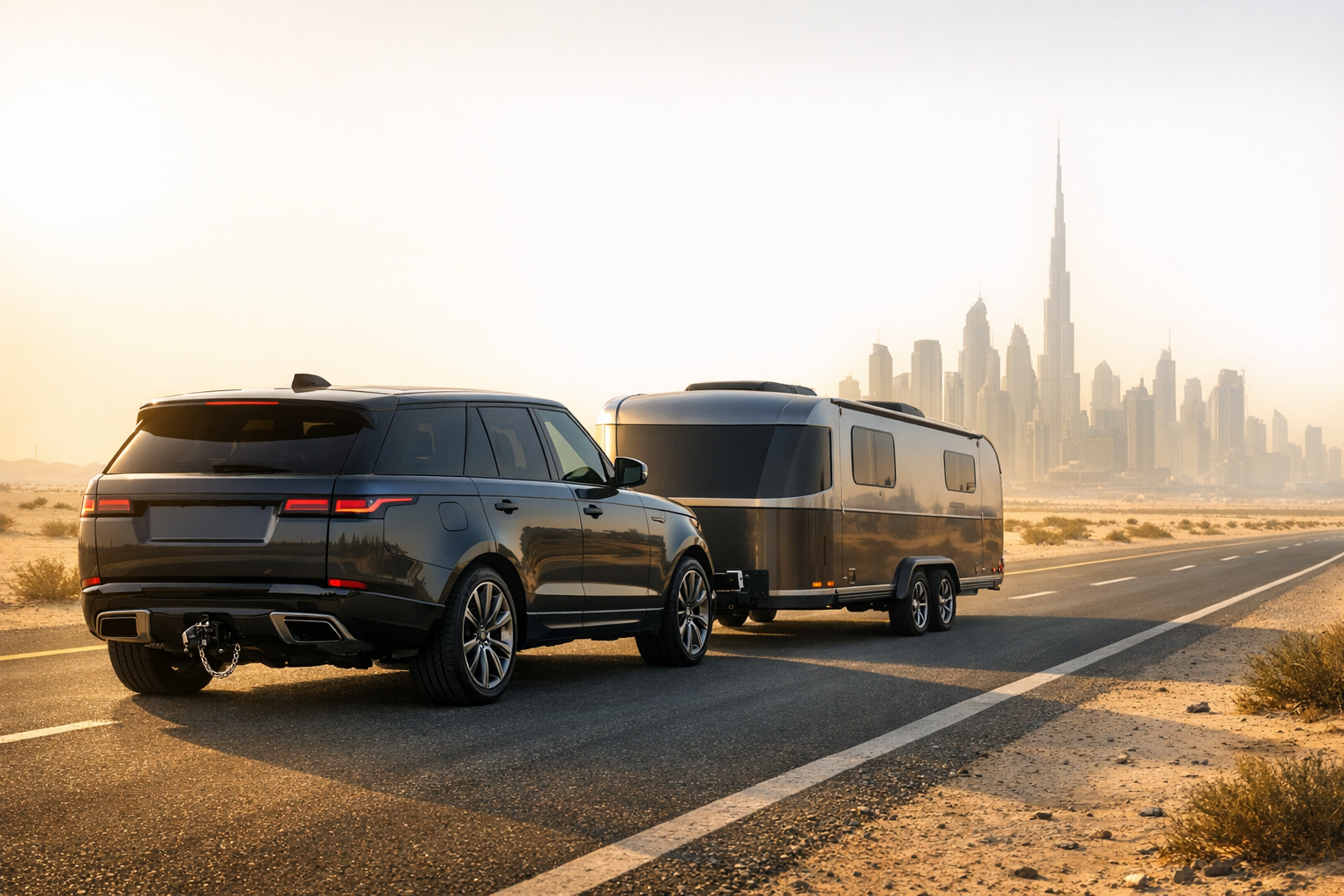
Range Rover towing in the UAE demands the right equipment, knowledge of local trailer laws, and a strategy for handling extreme heat. Whether you’re hauling a boat to Fujairah, pulling a cargo trailer across Dubai, or dragging a camper into the desert, this guide covers hitch setup, legal requirements, and hot-weather driving techniques to keep you safe and compliant on every trip.
Quick Takeaways
- Max braked towing capacity: Up to 3,500 kg (4.4-litre V8 Range Rover)
- Electrical connection: 13-pin wiring harness integrated with CAN bus for trailer stability assist
- UAE towing speed limit: Typically 100 km/h on highways, regardless of posted limits
- Nose weight guidance: Do not exceed 150 kg on most Range Rover models
- Before every tow: Enable towing mode via Terrain Response for automatic suspension and stability adjustments
Choosing the Right OEM-Rated Hitch, Towbar, and 13-Pin Electrics
The first step to safe Range Rover towing in Dubai or anywhere in the Emirates is ensuring your trailer hitch system matches factory specifications. Towing capacity varies by model—the current Range Rover with the 4.4-litre V8 offers a braked towing capacity of up to 3,500 kg, while plug-in hybrid variants may carry slightly lower ratings. Always confirm the exact figure in your owner’s manual or on the vehicle data sticker for your specific model year.
When selecting a towbar or trailer hitch, stick with OEM or OEM-approved options. Aftermarket tow bars that haven’t been engineered for your specific chassis can compromise structural integrity and void warranty coverage. A proper installation includes:
- A fixed or detachable towbar rated to your vehicle’s maximum braked towing weight
- A 13-pin electrical connector that integrates with the Range Rover’s Trailer Stability Assist and lighting systems
- Correct nose weight distribution, typically not exceeding 150 kg for most Range Rover models
For the electrical setup, the Range Rover’s advanced towing mode relies on communication between the trailer plug and the vehicle’s electronic systems. A dedicated 13-pin wiring harness that connects through the vehicle’s CAN bus ensures that features like Trailer Stability Assist, adaptive air suspension levelling, and automatic trailer lighting checks all function correctly. Without proper wiring, these safety systems cannot detect or respond to trailer behaviour.
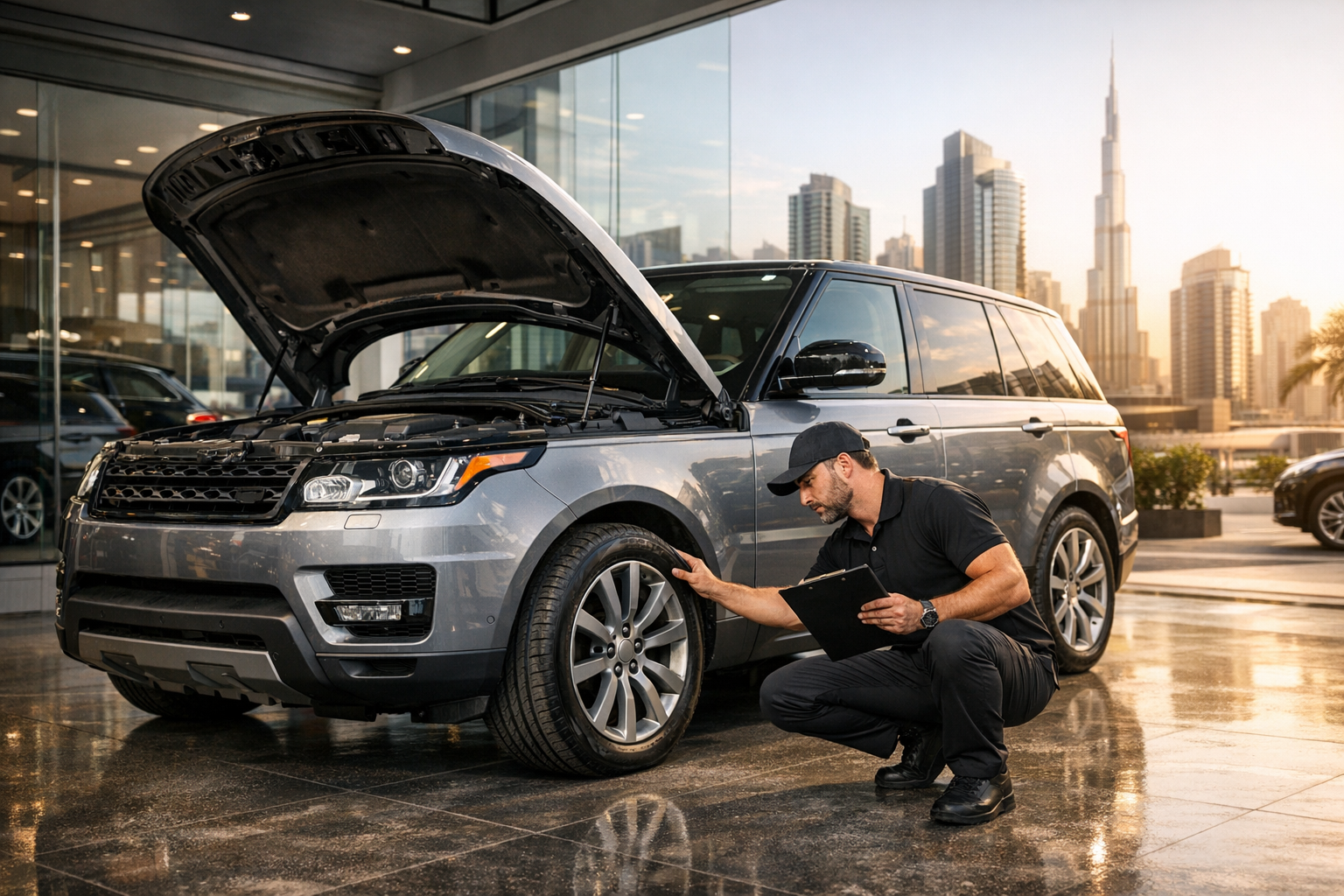
Need a towbar, wiring, or cooling system check? Book a Range Rover towing setup inspection in Dubai with Euro Expert for OEM-compliant installation and diagnostics.
UAE Trailer Laws: Registration, Speed Limits, and Weight Rules
Towing in the UAE is governed by federal traffic law and individual emirate regulations. Whether you’re pulling a braked trailer, an unbraked trailer, or a caravan, here are the key rules every Range Rover owner must follow:
- RTA trailer registration: All trailers must be registered with the relevant transport authority—RTA in Dubai, ITC in Abu Dhabi, or the equivalent in other emirates—and carry a valid number plate.
- Towing speed limits: When towing, the maximum speed on UAE highways is typically reduced to 100 km/h, even where the posted limit is 120 or 140 km/h. Speed camera tolerances do not change this obligation.
- Weight compliance: Your gross combination weight (vehicle + trailer + all loads) must not exceed the manufacturer’s stated limit. Overloading is a finable offence and a serious safety risk in the UAE’s high-temperature conditions.
- Licensing requirements: A standard UAE light-vehicle licence covers unbraked trailers up to 750 kg. Heavier braked trailers or caravan trailers may require additional endorsement depending on the emirate.
- Safety equipment: Trailers must have functioning brake lights, indicators, and reflectors. Safety chains connecting the trailer to the tow vehicle are strongly recommended and may be required during inspections.
Hot-Weather Towing Tips for Range Rover Owners in Dubai and Abu Dhabi
UAE summers push ambient temperatures beyond 50°C, and towing adds significant thermal load to your engine, transmission, and brakes. Here’s how to protect your Range Rover and prevent overheating when towing in summer:
Monitor transmission temperature
The added strain of pulling a heavy load in extreme heat can cause transmission fluid to overheat rapidly. Use the vehicle’s onboard diagnostics to keep an eye on temperatures, and avoid prolonged hill climbs in higher gears. If temperatures climb, pull over safely and allow the drivetrain to cool.
Leverage air suspension and towing mode
Engage the Range Rover’s towing mode through the Terrain Response system before setting off. This automatically adjusts ride height and suspension stiffness to maintain a level stance under load, improving both stability and braking performance—particularly important when pulling a heavy caravan or boat trailer.
Brake wisely on descents
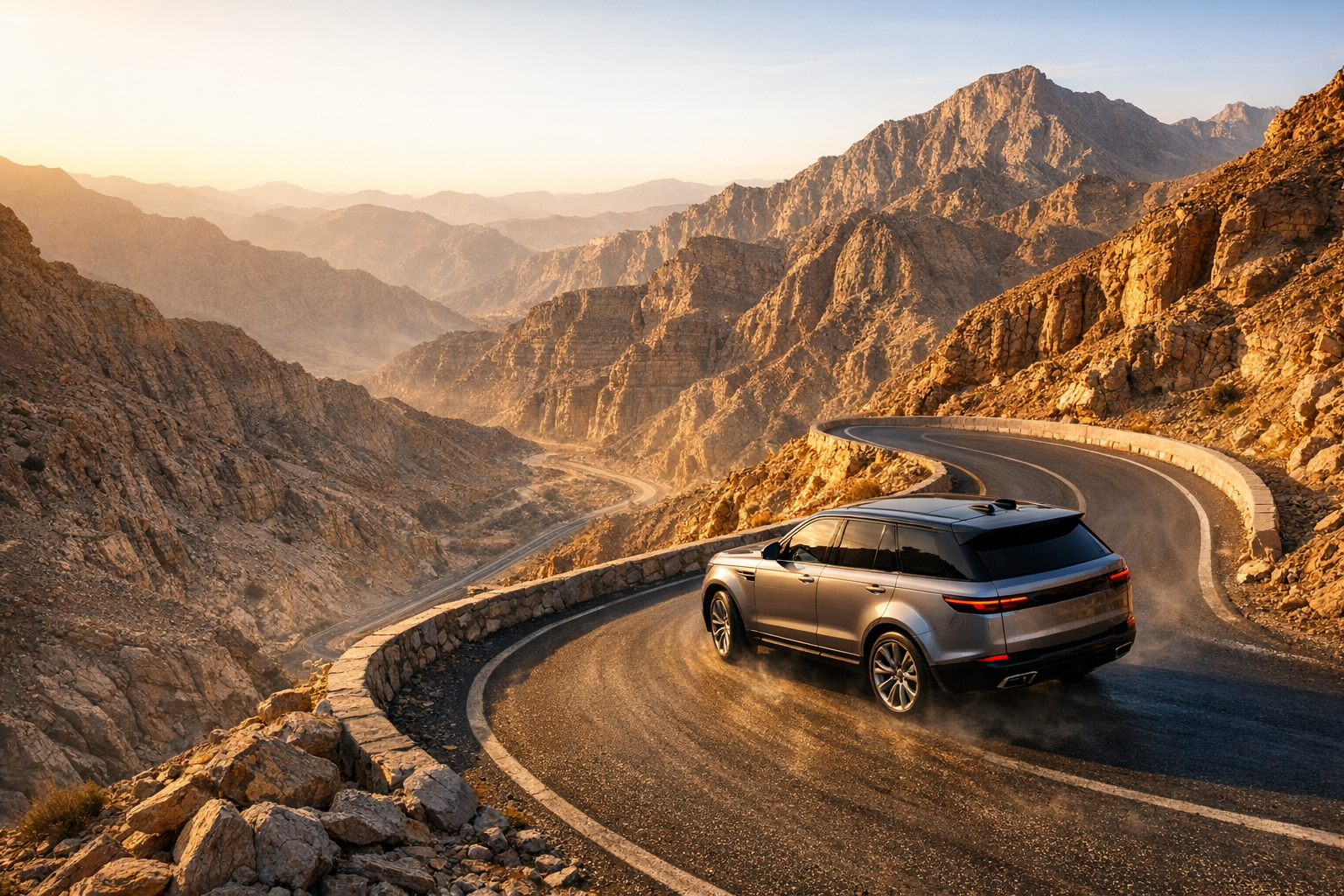
On long downhill stretches—common on mountain roads toward the east coast via Masafi or Hatta—use engine braking by manually selecting a lower gear. This reduces heat build-up in the brake discs, which is critical when towing heavy loads in hot weather. Avoid riding the brakes continuously.
Stay on top of coolant and fluid levels
Before any towing trip, check engine coolant, transmission fluid, and power steering fluid. Heat accelerates fluid degradation, so shorter service intervals are advisable if you tow regularly in the UAE climate.
Plan your route and rest stops
Give your vehicle periodic breaks on long hauls to let drivetrain temperatures normalise, particularly during peak summer months between June and September. Stopping for 15–20 minutes every 90 to 120 kilometres helps extend component life.
Keep Your Range Rover Tow-Ready Year-Round
Regular maintenance is non-negotiable for any vehicle used for towing, and even more so in the UAE’s harsh climate. Worn brake pads, degraded coolant, a slipping transmission, or corroded electrical connections on your 13-pin plug can turn a routine tow into a dangerous situation.
If you tow regularly—whether it’s a boat trailer on weekends or a work trailer daily—having a specialist inspect your towing setup, drivetrain, and cooling system at least twice a year is essential. The team at Euro Expert offers dedicated Range Rover repair in Dubai and can assess your towbar mounting, electrical connections, suspension components, and fluid condition to ensure everything performs as Land Rover intended.
Ready to tow with confidence? Book a Range Rover towing setup inspection in Dubai with Euro Expert and hit the road knowing your vehicle is safe, legal, and prepared for whatever the UAE climate throws at it.
Frequently Asked Questions
What is the Range Rover towing capacity in the UAE?
The Range Rover equipped with the 4.4-litre V8 has a maximum braked towing capacity of 3,500 kg. Hybrid and smaller-engine variants may have lower ratings. Always check your vehicle’s specific data plate, as towing capacity can vary by model year and specification.
What is the towing speed limit in Dubai and Abu Dhabi?
When towing a trailer in the UAE, the maximum permitted speed is typically 100 km/h on highways, even where the posted limit for other vehicles is 120 or 140 km/h. This applies across all emirates including Dubai and Abu Dhabi.
Do I need a 13-pin connector for trailer lights and stability assist?
Yes. The Range Rover’s Trailer Stability Assist and automatic lighting check systems require a 13-pin electrical connection routed through the vehicle’s CAN bus. A basic 7-pin connector will power lights but won’t enable the full suite of electronic towing safety features.
How do I prevent overheating when towing in summer?
Activate towing mode via Terrain Response, monitor transmission temperature on the dashboard, use engine braking on descents, and take regular rest stops every 90–120 km. Keep coolant and transmission fluid at correct levels and consider shortened service intervals if you tow frequently in temperatures above 40°C.