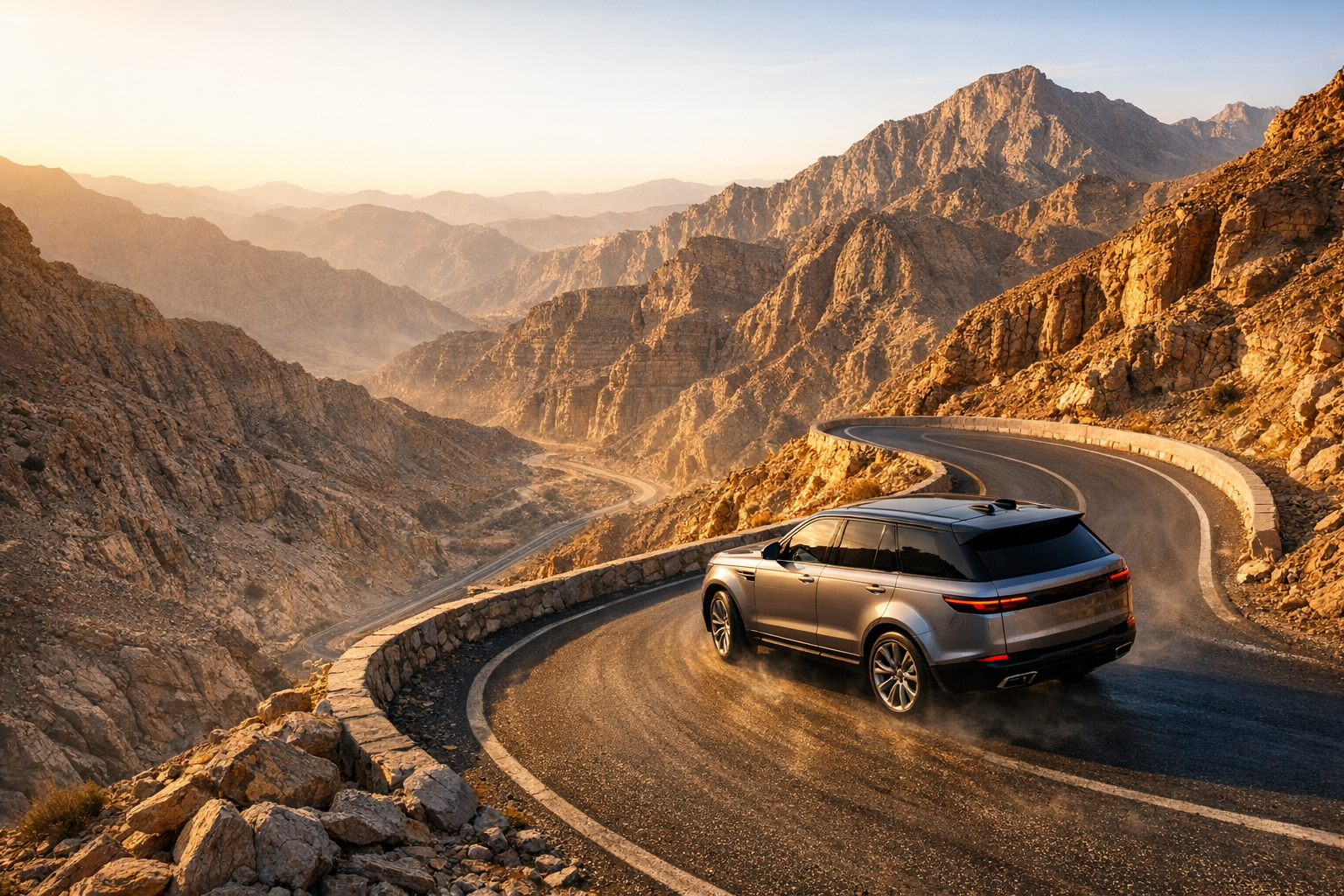
Driving your Range Rover up Jebel Jais or around Hatta is epic—until overheated brakes spoil the descent. The Hajar Mountains offer some of the most dramatic driving in the Gulf region, from the sweeping switchbacks of Jebel Jais in Ras Al Khaimah—the UAE’s highest peak at 1,934 metres—to the rugged wadis and elevated trails surrounding Hatta. But these routes place serious demands on your braking system, particularly during long descents in Dubai summer heat that regularly exceeds 40°C.
Here’s how to keep stopping power strong so you stay in control, not on the pedal.
Understanding Brake Fade in Hot Climates
Brake fade occurs when friction material overheats and loses its ability to grip the rotor effectively. On the Jebel Jais road in Ras Al Khaimah, long descents and extreme ambient temperatures can trigger brake fade symptoms—longer stopping distances, a soft pedal, and a hot, acrid smell from boiling brake fluid.
In the UAE, you’re already starting at a thermal disadvantage. Your brakes begin every drive closer to their heat threshold than they would in cooler climates, which means they reach critical temperatures faster on sustained downhill stretches. Heavy vehicles like the Range Rover Sport, Vogue, or fully loaded long-wheelbase models generate enormous kinetic energy on downhill sections. Relying solely on the brake pedal to manage that energy is a recipe for overheated rotors, glazed pads, and degraded stopping power.
Use Hill Descent Control (HDC) Early and Often
Every modern Range Rover—including the Sport, Vogue, Velar, and Defender—comes equipped with Hill Descent Control. HDC uses the ABS system to apply controlled braking to individual wheels, maintaining a preset crawl speed without requiring any pedal input from the driver.
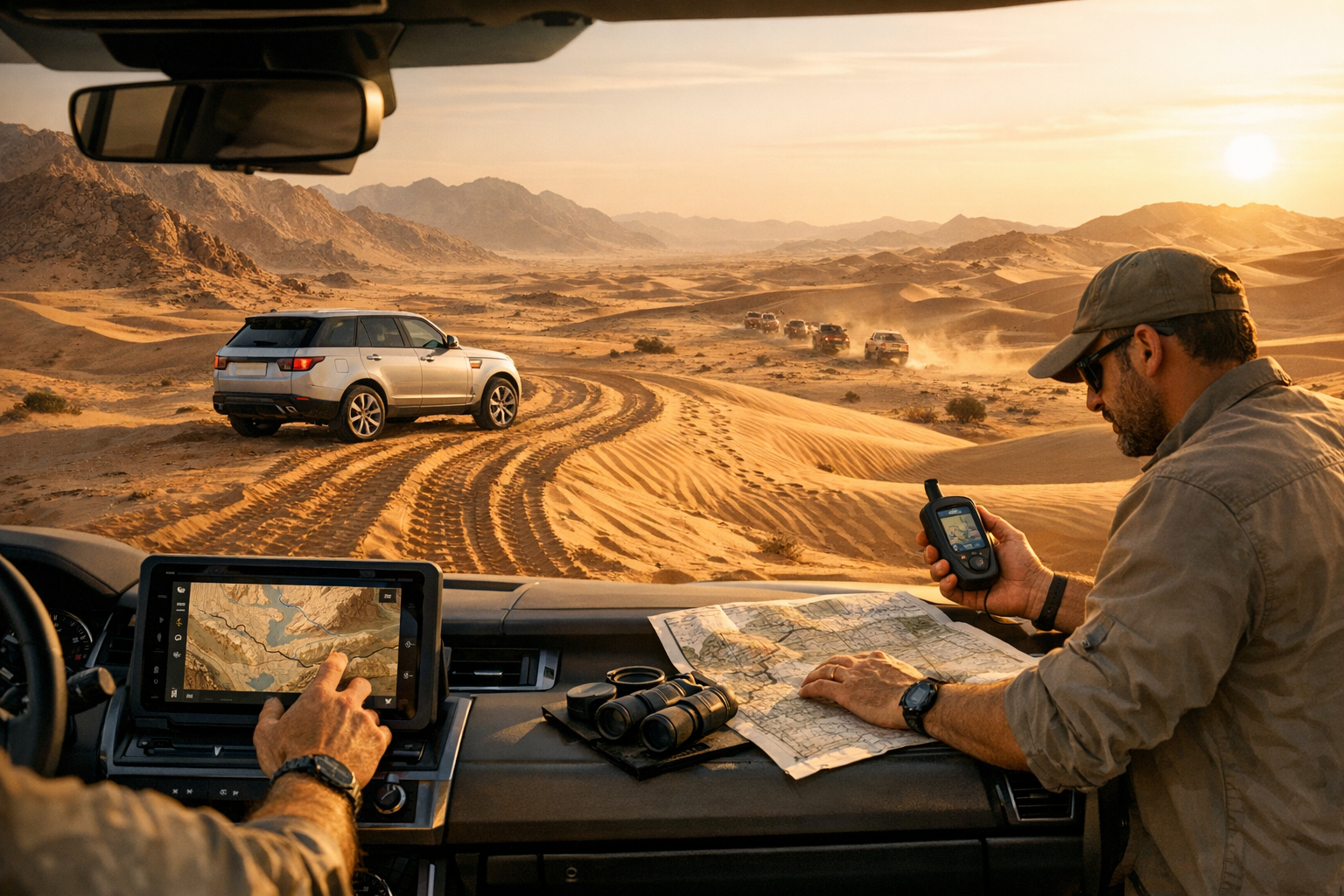
Engage HDC before the descent begins, not halfway down when you’ve already built up speed. On technical Hatta off-road trails with loose gravel or steep gradients, HDC lets you focus entirely on steering while the system manages speed. It’s particularly effective at low speeds on steep, unpaved sections where manual braking can easily lock wheels.
Should you use Hill Descent Control on paved roads? Generally, HDC works best on steep, low-speed, loose surfaces. On paved mountain roads like the Jebel Jais road, lower gears and light, intermittent braking are more appropriate at normal driving speeds.
Master Gear Selection and Engine Braking
Engine braking is your most important tool for managing speed on long descents, and it generates zero heat buildup in the braking system. The principle is simple: a lower gear forces the engine to turn faster relative to road speed, creating resistance that slows the vehicle without touching the brakes.
For Range Rovers equipped with automatic transmissions, use the sequential manual mode or paddle shifters to select a lower gear before the descent. Second or third gear is typically appropriate for mountain roads like Jebel Jais. If your Range Rover Sport or Vogue features Terrain Response 2, select the appropriate mode—Rock Crawl or Mud/Ruts for off-road descents—and the system will automatically optimise gear selection and throttle response.
The key discipline is this: select your gear at the top and let the engine do the work. If you find yourself needing the brakes frequently, you’re in too high a gear—drop one more and let engine braking hold your speed.
Brake Setup and Maintenance for UAE Conditions
Even with perfect technique, your braking hardware must be up to the task. Mountain driving in UAE heat accelerates wear on pads, rotors, and brake fluid. Consider these maintenance priorities:
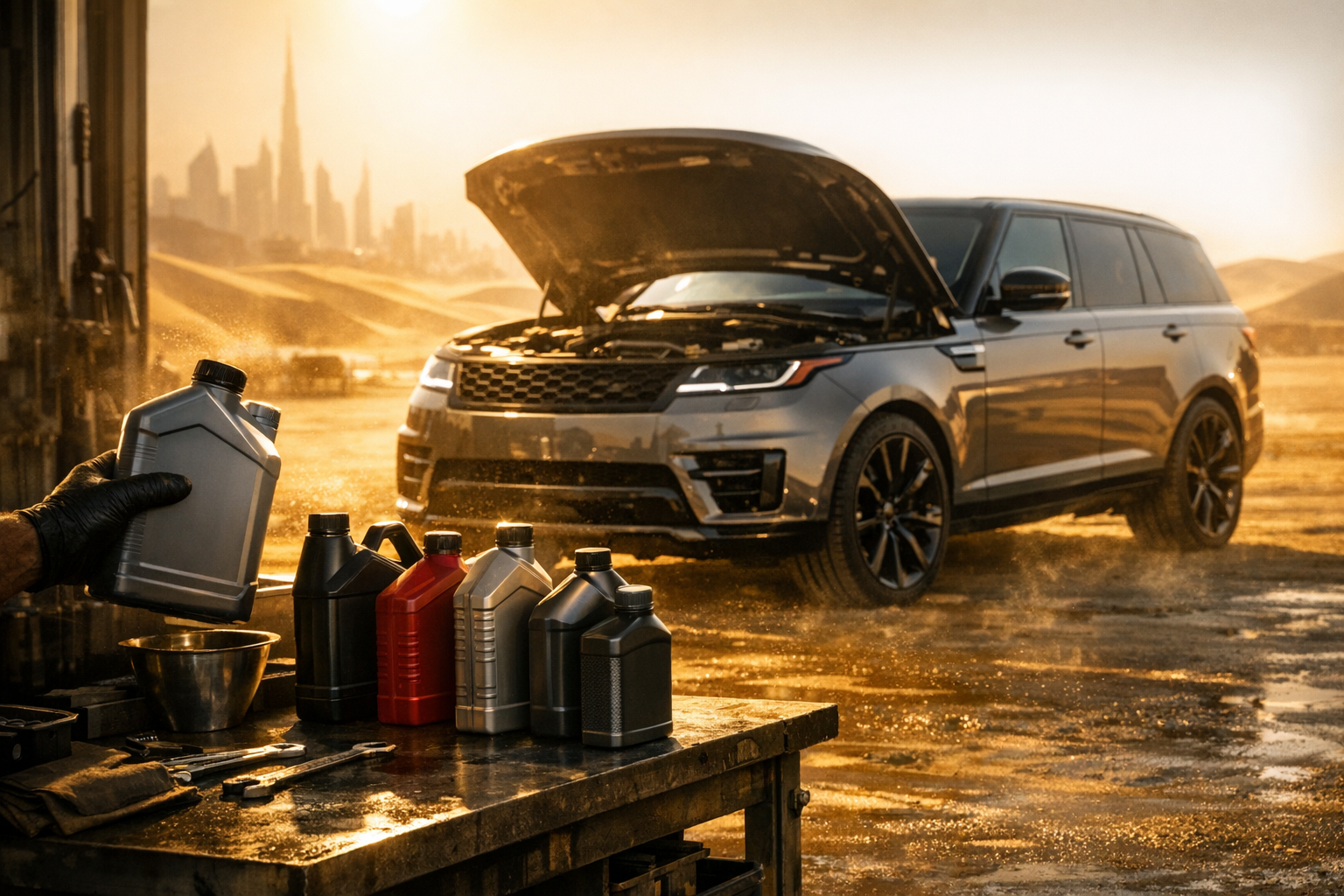
- Brake fluid: High-boiling-point DOT 4 or DOT 5.1 fluid resists fade far better than standard fluid. Flush it annually if you drive mountain routes regularly—more often if you notice a spongy pedal after descents.
- Brake pads: Performance-oriented pads with higher heat tolerance make a measurable difference on sustained descents through the Hajar Mountains.
- Rotor condition: Warped or worn rotors reduce braking efficiency and can cause vibration under load. Have them inspected before any extended mountain trip.
If you notice vibration or a soft pedal after a mountain drive, book a same-week Range Rover brake service in Dubai at Euro Expert to diagnose pads, rotors, and fluid. Their team provides dedicated Range Rover servicing tailored to the demands of UAE driving conditions, including brake system upgrades for owners who regularly tackle Jebel Jais and Hatta.
Plan Your Descent
Before tackling any mountain route, know what you’re getting into. The Jebel Jais road features approximately 30 kilometres of continuous descent from the summit, with multiple hairpin turns and no shortage of tourist traffic. Hatta’s surrounding off-road trails offer shorter but steeper unpaved sections that demand HDC and careful gear selection.
In both cases, pull over periodically if you’ve been applying the brakes heavily. Even a five-minute stop lets rotors shed significant heat and restores pad performance. Watch for brake fade symptoms: increasing pedal travel, reduced deceleration, or any burning smell.
Final Thoughts
Mountain driving in the UAE is one of the great pleasures of Range Rover ownership—but it demands respect for the physics involved. Use engine braking as your primary speed control, engage HDC on technical terrain, maintain your brake system rigorously, and choose your gear before gravity makes the choice for you. With the right technique and properly maintained hardware, brake fade becomes a problem you read about rather than experience firsthand.
Before your next Jebel Jais run, schedule a quick brake inspection—Euro Expert’s Range Rover brake service in Dubai will make sure your system is ready for the heat and the descent.
Frequently Asked Questions
What causes brake fade on Jebel Jais in summer?
High ambient heat and long descents overheat pads, rotors, and fluid, reducing friction and pedal feel. The Jebel Jais road’s 30-kilometre descent combined with temperatures above 40°C pushes braking systems to their limits, especially on heavier Range Rover models.
Which gear is best for long descents in a Range Rover?
Select second or third gear before the downhill begins and let engine braking hold your speed. If you need frequent braking, drop one more gear. The goal is to arrive at the bottom with cool brakes and full stopping power in reserve.
Should I use Hill Descent Control on paved roads?
Use HDC mainly on steep, low-speed, loose surfaces like Hatta’s off-road trails. On paved roads such as the Jebel Jais road, lower gears combined with light, intermittent braking work best at normal driving speeds.
How often should I change brake fluid in the UAE?
Annually if you drive mountain routes regularly. High-boiling-point DOT 4 or DOT 5.1 fluid resists fade significantly better in hot climates. If you only drive in the city, every two years is a reasonable interval, but mountain drivers should not stretch beyond twelve months.