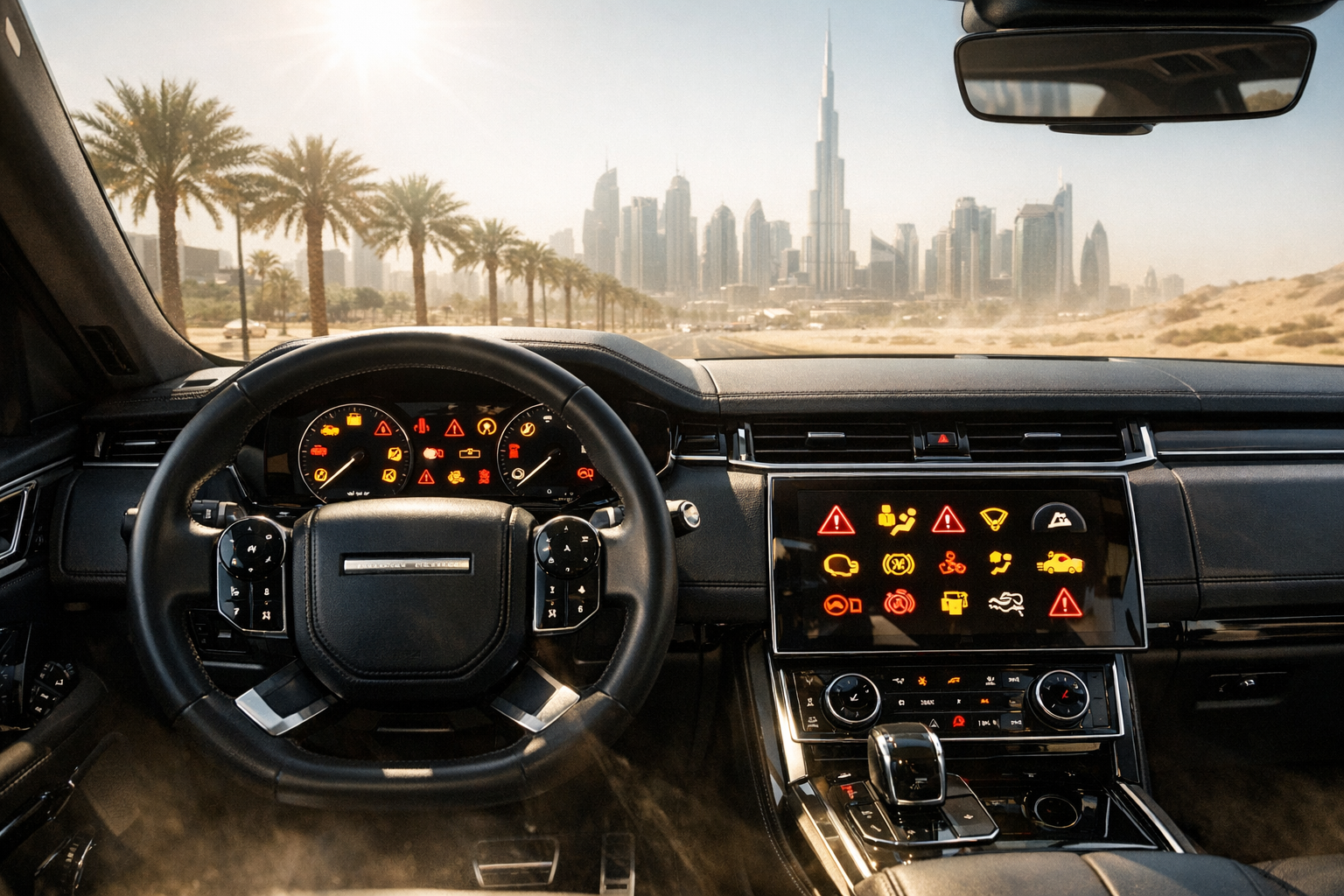
Your Range Rover’s dashboard is designed to communicate with you—but when multiple warning lights illuminate simultaneously on a 50°C summer drive down Sheikh Zayed Road, it can feel more like a panic attack than a polite notification. Understanding what each Range Rover warning light means in the UAE, and whether you need to stop immediately or can safely drive to a workshop, is essential knowledge for every owner in this region.
This guide decodes the most common Range Rover dashboard symbols and their meanings, with UAE-specific advice on heat, sand, and when to pull over versus keep driving.
Range Rover Check Engine Light (Amber/Yellow/Red): What It Means in Dubai
The amber or yellow engine management light—commonly called the check engine light on a Range Rover—indicates an emissions or engine performance issue. In the UAE’s extreme heat, this frequently triggers due to failing oxygen sensors, degraded ignition coils, or fuel evaporation system faults exacerbated by high ambient temperatures.
A red engine warning light signals a more severe problem requiring immediate attention.
Can you keep driving? If the light is steady and amber, you can usually drive carefully to a specialist. If it flashes, you must stop—this indicates active misfires that can destroy catalytic converters within minutes.
What to Do If Your Check Engine Light Is Flashing
- Reduce speed immediately and pull over to a safe location away from traffic.
- Switch off the engine and wait two minutes before restarting.
- If the light continues flashing on restart, do not drive—arrange recovery.
- Note any other symptoms (rough idle, loss of power, unusual smell) to report to your technician.
Range Rover Overheating Warning (Red Thermometer): Stop Now in UAE Heat
This is arguably the most critical dashboard indicator for UAE-based Range Rovers. When outside temperatures exceed 45°C, your cooling system works at near-maximum capacity even under normal driving conditions. A red temperature warning means your engine is overheating right now.
Why does a Range Rover overheat faster in UAE summers? The extreme ambient heat combined with heavy AC load drastically reduces the cooling system’s headroom. Add stop-start traffic on Sheikh Zayed Road or a long highway cruise across the desert, and you’re pushing the system to its limits.
Stop driving immediately. Continuing to drive—even for a few hundred metres—can warp cylinder heads or crack engine blocks, turning a relatively simple repair into a five-figure bill. Common culprits in the UAE include degraded coolant, failing water pumps, and radiators clogged with fine desert sand.
What to Do When Your Range Rover Overheats in Dubai
- Set the cabin heater to maximum hot—this draws heat away from the engine while you coast to a safe stop.
- Pull over safely and switch off the engine immediately.
- Do not open the coolant cap—wait at least 30–45 minutes for pressure to drop.
- Arrange recovery; mention recent desert driving, highway speed, and AC load when you call your workshop.
Air Suspension Fault in Dubai: “Normal Height Only” and What to Do
Range Rovers are renowned for their air suspension systems—and equally notorious for their failure rates, particularly in hot climates. You may see dashboard messages like “Suspension Fault,” “Normal Height Only,” or notice the vehicle sitting visibly lower on one corner.
Air suspension faults on Range Rovers in the UAE are extremely common because heat accelerates rubber deterioration in air springs. Proactive replacement around the 80,000–100,000 km mark is wise for vehicles driven regularly in this region.
Can you keep driving? At reduced speed, yes—but only to reach a qualified workshop. Driving at highway speeds on a failed air spring risks damaging other suspension components, and in severe cases the vehicle can drop suddenly on one corner, creating a dangerous handling imbalance at speed.
What to Do When Your Range Rover Air Suspension Drops
- Reduce speed to below 60 km/h and avoid highways if possible.
- Do not use the ride height adjustment buttons—forcing a failed system can cause further damage.
- Drive directly to a specialist; do not plan long journeys or further off-road use.
- If the vehicle is sitting extremely low or leaning sharply to one side, stop and arrange recovery rather than risk a blowout or loss of control.
Brake and ABS Lights on a Range Rover: Drive or Stop?
A red brake warning light could indicate low brake fluid, critically worn pads, or a serious hydraulic fault. An amber ABS light means your anti-lock braking system has a fault—your brakes still work, but without ABS intervention during emergency stops.
In the UAE, brake dust combined with fine sand accelerates sensor wear, and extreme heat can degrade brake fluid faster than in temperate climates. Regular cleaning and fluid checks during routine servicing are essential.
Red brake light? Stop as soon as safely possible and have the vehicle recovered. Amber ABS light? Drive cautiously to a workshop, avoiding sudden braking.
What to Do If Your Range Rover Shows a Red Brake Warning
- Gently test brake pedal feel—if it feels soft, spongy, or sinks to the floor, stop immediately.
- Pull over in a safe location and apply the parking brake.
- Do not attempt to drive further; arrange vehicle recovery.
- If brake fluid is visibly leaking beneath the vehicle, inform your recovery service and workshop before they arrive.
4×4, HDC, and Terrain Response Faults After Desert Driving
Messages like “HDC Fault,” “Transmission Fault,” or “DSC Unavailable” relate to your Range Rover’s sophisticated all-wheel-drive and stability systems. These are particularly common after off-road excursions in the UAE desert, where sand ingress affects wheel speed sensors and heat-soaked electronics cause temporary or permanent faults.
What causes HDC and DSC faults after desert trips? Fine sand coats wheel speed sensors and ABS rings, interrupting the signals these systems rely on. Heat cycling during and after off-road driving can also stress electrical connectors and control modules.
Can you keep driving? Generally yes, with caution and at moderate speeds on paved roads. However, avoid any further off-road driving until the system is diagnosed, as you may not have the electronic safety nets—hill descent control, stability control, traction management—that you’re relying on.
What to Do When You See HDC, DSC, or Terrain Response Faults
- Return to paved road and reduce speed; drive as though you have no electronic traction aids.
- Avoid steep descents or loose surfaces where HDC would normally intervene.
- After reaching tarmac, stop and restart the vehicle—some sensor faults clear once sand dislodges.
- If faults persist after restart, book a diagnostic appointment before your next desert trip.
UAE-Specific Tips for Range Rover Dashboard Warnings
- Summer amplifies everything. Electrical faults, fluid degradation, and rubber component failure all accelerate dramatically between May and September. Warning lights that appear during peak summer should be treated with extra urgency.
- Sand is insidious. Fine desert particles work into sensors, brake components, and cooling systems in ways that don’t occur in other markets. Post-desert underbody cleaning is not optional—it’s maintenance.
- Don’t ignore “soft” warnings. What might be a minor sensor fault in London can become a roadside breakdown in Abu Dhabi’s Empty Quarter or on a remote stretch of the E11.
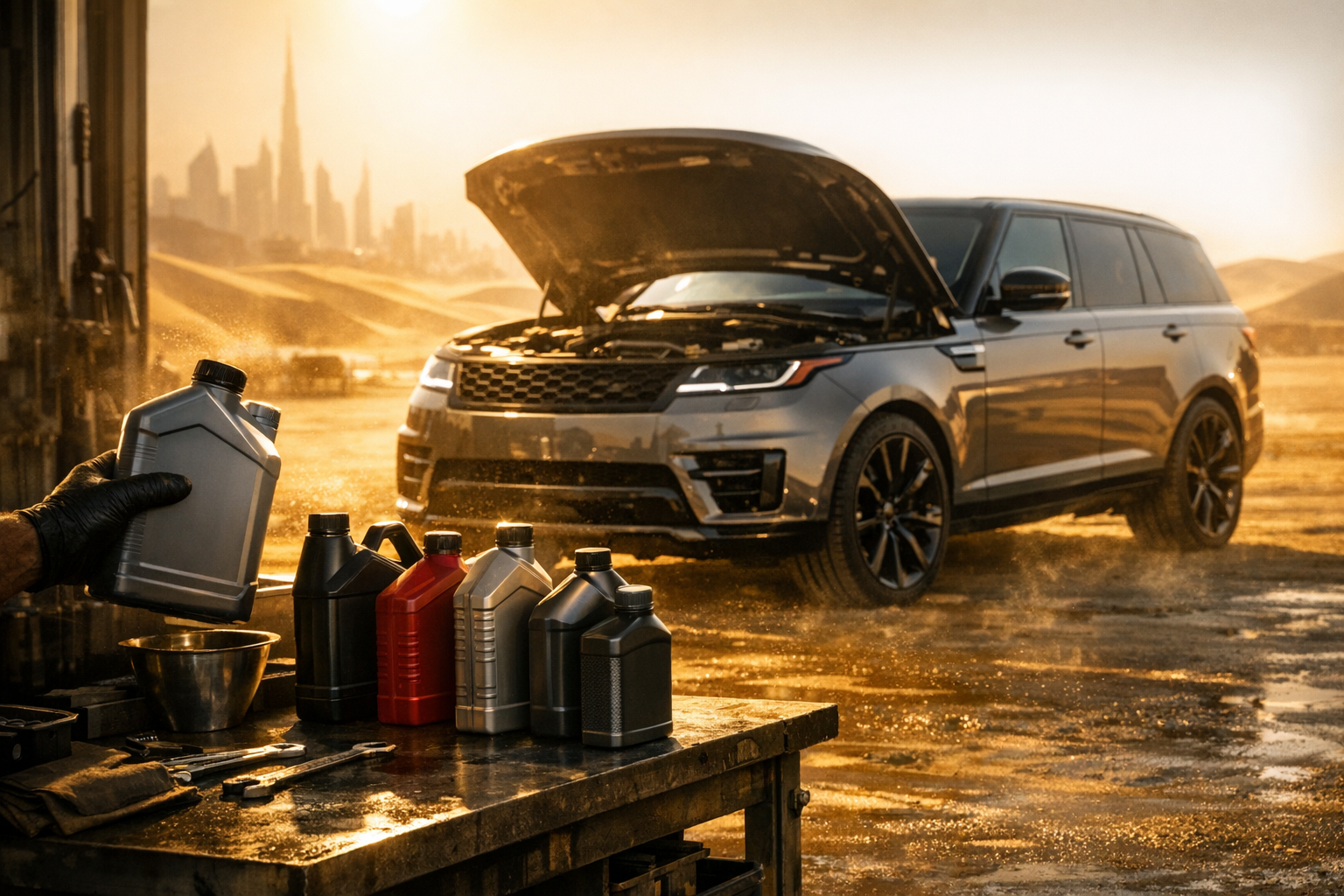
- Coolant and fluids need more frequent attention. Follow severe-duty service intervals rather than standard schedules. If your manual suggests coolant changes every four years, halve that in the UAE.
- Keep recovery numbers saved. AAA, your insurance roadside assistance, and your workshop’s direct line should all be in your phone before you need them.
The Bottom Line
When in doubt, pull over. The cost of a recovery truck is always less than the cost of catastrophic engine or transmission damage. For any Range Rover warning light that persists—whether it’s the check engine light, an overheating alert, or an air suspension fault—have your vehicle inspected by specialists who understand the unique demands the UAE climate places on these vehicles.
If you’re in Dubai and need fast, reliable diagnostics, book Range Rover repair in Dubai at Euro Expert. Their technicians understand UAE heat and sand issues inside out—call now to schedule a same-day inspection before a dashboard warning becomes a roadside emergency.
Your dashboard is talking to you—make sure you’re listening.
Frequently Asked Questions: Range Rover Warning Lights in the UAE
Is it safe to drive with a yellow check engine light on a Range Rover in Dubai?
Usually yes—you can drive carefully to a nearby workshop for diagnosis. However, if the check engine light is flashing rather than steady, stop immediately. A flashing light indicates active misfires that can cause expensive catalytic converter damage within minutes.
Why does my Range Rover overheat faster in UAE summers?
Extreme ambient temperatures (often exceeding 45–50°C) combined with heavy air conditioning load drastically reduce your cooling system’s spare capacity. The system that copes comfortably in a European winter is already working near its limit before you even encounter a fault. Sand-clogged radiators and degraded coolant compound the problem.
Can I drive with a Range Rover air suspension fault in the UAE?
At low speed only—stay below 60 km/h and avoid highways. A failed air spring creates uneven handling that becomes dangerous at higher speeds. Drive directly to a specialist or arrange recovery if the vehicle is sitting noticeably low or leaning to one side.
What causes HDC and DSC faults after desert trips?
Fine sand coats wheel speed sensors and ABS reluctor rings, disrupting the electronic signals that hill descent control and stability systems depend on. Heat cycling during off-road driving can also stress wiring connectors and control modules. A restart sometimes clears the fault; persistent warnings need professional diagnosis.
How often should I change coolant in a Range Rover in the UAE?
More frequently than the standard service schedule suggests. Most manufacturers recommend coolant changes every four to five years or 80,000–100,000 km in normal conditions. In the UAE’s severe heat, halving that interval—or at minimum having coolant strength and condition tested annually—helps prevent overheating failures.
Where can I get Range Rover warning lights diagnosed in Dubai?
Specialists with experience in UAE climate-related faults are your best option. Euro Expert in Dubai offers same-day Range Rover diagnostics and repair, with technicians trained to identify heat and sand damage that general workshops often miss.