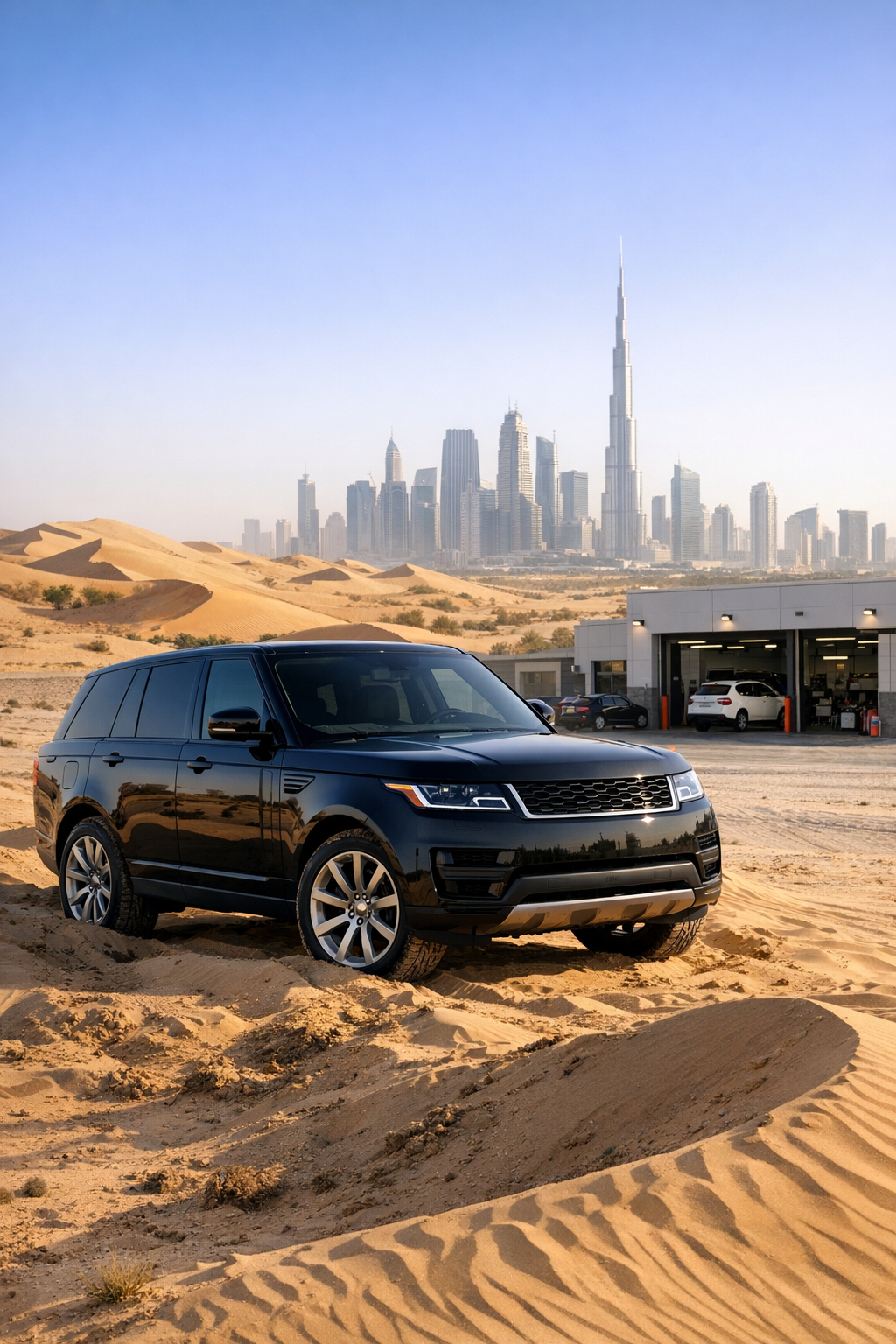
This UAE-focused guide to Range Rover air suspension covers height modes, Dubai ramps and speed bumps, and how to protect your compressor in summer heat. Whether you’re navigating Abu Dhabi highways, tackling Dubai speed humps, or heading into the desert for wadi crossings, your Range Rover’s Electronic Air Suspension (EAS) system is engineered to adapt—but the Gulf’s extreme conditions demand a smarter approach. Here’s everything you need to know about using and preserving your Range Rover suspension in Dubai and across the Emirates.
The Range Rover’s air suspension is a sophisticated network of air springs, electronic height sensors, and a high-pressure compressor that delivers everything from limousine-smooth highway cruising to genuine off-road capability. However, UAE summers that push beyond 50°C, fine desert dust, and the region’s unique road infrastructure all place extra stress on this system. With the right habits, you can extend component life, avoid costly repairs, and maintain the commanding ride quality that defines the Range Rover experience.
If you notice sagging, uneven height, or a loud compressor, book a diagnostic at Euro Expert—Range Rover air suspension repair in Dubai before minor issues cascade into major failures.
Range Rover Ride Height Modes for UAE Roads
Range Rover models typically offer four or five EAS ride height settings, each designed for specific driving scenarios common across the UAE:
Access Height lowers the vehicle by approximately 50mm, making it easier for passengers to enter and exit. In the UAE, this mode is particularly useful at valet drops, mall entrances, and when elderly family members or children need to climb aboard. The system automatically raises back to normal height once you exceed around 30 km/h.
Normal Height is your everyday default. It provides the ideal balance between ride comfort, aerodynamic efficiency, and fuel economy for Abu Dhabi highways and Dubai city streets. Keep it here for your daily commute—it’s optimised for the smooth, well-maintained roads that make up most UAE driving.
Off-Road Height raises the vehicle by approximately 40mm above normal, increasing ground clearance for desert tracks, construction zones, and unpaved roads. If you frequently drive through areas under development—common across Dubai, Sharjah, and emerging communities—this setting helps clear uneven surfaces and debris.
Extended Off-Road Height provides maximum clearance (up to 75mm above normal) for serious dune driving or wadi crossings in Hatta, Ras Al Khaimah, or the Al Hajar foothills. Use it only at low speeds, as the raised centre of gravity affects handling and stability.
Dubai Parking Ramps and Speed Bumps: Clearance Tips
The UAE is notorious for steep underground parking ramps and aggressive speed bumps—sometimes three or four in quick succession. Many Range Rover owners instinctively raise the suspension every time they approach a ramp, but this isn’t always necessary. Normal height provides adequate clearance for most parking structures in Dubai Marina, Downtown, and newer developments.
However, for particularly steep ramps—common in older buildings in Deira, Bur Dubai, or Karama—briefly selecting off-road height before entry can prevent scraping the front splitter or undercarriage. The same applies to extra-tall Dubai speed humps found in residential communities and school zones.
A better habit is to approach ramps at an angle when possible and maintain a slow, steady speed rather than constantly cycling the suspension up and down. Every height adjustment activates the compressor, and unnecessary cycling accelerates wear on both the compressor motor and valve block seals.
Load Management: Keep Your Range Rover Level
When loading heavy luggage for a family road trip to Oman, Fujairah, or Al Ain, or filling the boot after a shopping run, the EAS automatically compensates to maintain level ride height. However, you can help the system by:
- Distributing weight evenly across the cargo area rather than piling everything to one side.
- Avoiding loads that exceed the manufacturer’s stated maximum payload.
- Allowing the vehicle a moment to self-level before driving off—the system needs a few seconds to read sensors and inflate the appropriate air springs.
If you notice one corner sitting lower than others under load, it may indicate a slow air spring leak—a problem best addressed early before it damages the compressor through overwork. In the UAE’s heat, a leaking air spring forces the compressor to run longer and hotter, dramatically shortening its lifespan.
UAE Heat and Desert Dust: Protect Your EAS Compressor
UAE summers are the single biggest threat to Range Rover air suspension longevity. With ambient temperatures regularly exceeding 50°C and under-bonnet temperatures climbing even higher, compressor overheating in UAE summer is a common issue. The compressor generates significant heat during operation, and prolonged or frequent cycling in extreme heat can trigger its thermal protection, temporarily disabling all height adjustments and displaying a suspension fault warning on the dashboard.
To reduce compressor strain during summer:
- Avoid repeatedly changing height settings during short trips. Each cycle forces the compressor to work in already-extreme thermal conditions.
- Park in shaded or covered areas when possible to reduce overall under-bonnet temperatures. Even ten degrees of ambient cooling makes a measurable difference in compressor longevity.
- Keep the system in normal height during highway driving, where aerodynamic mode may activate automatically to lower the vehicle at speed—this actually reduces compressor load since the system settles into a steady state.
- Don’t leave the vehicle in off-road or extended height when parked. The system will attempt to maintain that height, running the compressor periodically even while stationary.
Fine desert dust is equally damaging to Range Rover air suspension in the UAE. It infiltrates air spring seals, deteriorates rubber bellows, and clogs the compressor’s intake filter over time. If you regularly drive on unpaved roads, encounter sandstorms, or spend weekends in the desert, have the EAS system inspected more frequently than standard service intervals suggest—every 20,000 km rather than the typical 30,000–40,000 km schedule.
Maintenance and Early Warning Signs in the UAE
Proactive care is far cheaper than reactive repair when it comes to Electronic Air Suspension. Air springs typically last 80,000–120,000 kilometres in the UAE, but heat, dust, and neglect can shorten that window significantly. Compressors may fail even sooner if they’re consistently overworked by leaking springs or excessive height cycling.
Watch for these warning signs of air suspension problems:
- The vehicle sitting noticeably low after overnight parking—a classic indicator of an air spring leak allowing air to escape while the ignition is off.
- Uneven ride height across corners, where one side appears lower than the other.
- The compressor running loudly or for extended periods after startup—this suggests it’s working harder than normal to build pressure, often because air is escaping somewhere in the system.
- Dashboard suspension fault warnings, which may appear intermittently at first before becoming persistent.
- Slow height changes when switching modes—the system should respond within seconds, not minutes.
When any of these signs appear, specialist attention makes a significant difference. A Range Rover workshop in Dubai that understands Gulf-specific wear patterns can diagnose whether the issue is a deteriorating air spring, a failing compressor, a leaking valve block, or simply a clogged filter—each requiring very different solutions at very different price points.
Final Thoughts: Protecting Your Range Rover Air Suspension in the UAE
Your Range Rover’s air suspension is engineered to handle virtually any terrain, but it isn’t immune to the UAE’s harsh environment. By using height modes purposefully, managing loads intelligently, minimising unnecessary compressor cycling, and respecting the system’s thermal limits during summer, you’ll preserve ride quality, avoid costly component failures, and enjoy the commanding comfort that makes the Range Rover perfectly suited to life in the Emirates.
The key principles are simple: use Normal height as your default, raise only when genuinely needed, keep weight balanced, and respond to early warning signs before they escalate. With these habits, your EAS system will deliver reliable performance across Dubai’s urban landscape, Abu Dhabi’s highways, and the UAE’s desert terrain for years to come.
If your Range Rover is showing any suspension warning signs—sagging overnight, uneven stance, loud compressor operation, or dashboard faults—don’t wait for a complete failure. Book a diagnostic at Euro Expert—Range Rover air suspension repair in Dubai for specialist assessment and repair that accounts for the unique demands of Gulf driving conditions.
Frequently Asked Questions: Range Rover Air Suspension in the UAE
What’s the best height mode for Dubai speed bumps?
Normal height is sufficient for the majority of Dubai speed humps. For extra-tall or sharply angled humps found in some older residential areas and school zones, briefly selecting Off-Road Height adds approximately 40mm of clearance. Return to Normal once you’re past the humps to maintain stability and fuel economy.
Why does my Range Rover show “suspension fault” in UAE summer?
This is often caused by compressor overheating and thermal protection activation. When ambient temperatures exceed 45–50°C, frequent height changes can push the compressor past its thermal limit. Let the vehicle cool in shade, avoid cycling height modes, and if the warning persists, have the system diagnosed—it may indicate a developing air spring leak forcing the compressor to overwork.
How long do Range Rover air springs last in the UAE?
Air springs typically last 80,000–120,000 km in Gulf conditions, though extreme heat and regular dust exposure can reduce this. Rubber compounds degrade faster in sustained high temperatures, and sand particles accelerate seal wear. Regular inspection helps catch deterioration before a complete failure occurs.
How do I know if my air suspension compressor is failing?
Common signs include: the compressor running loudly or for unusually long periods, slow response when changing height modes, the vehicle failing to reach full height, and repeated suspension fault warnings. In the UAE heat, compressor failures are often preceded by weeks of gradually worsening performance—catching it early can sometimes mean a repair rather than full replacement.
Is it safe to drive in Off-Road Height on Dubai construction roads?
Yes, Off-Road Height is appropriate for unpaved construction zones, graded sand roads, and rough surfaces at low speeds (under 50 km/h). However, return to Normal Height once you’re back on tarmac—the raised centre of gravity reduces high-speed stability, increases fuel consumption, and keeps the compressor working to maintain the elevated position.