In Dubai’s 50°C summers, your Range Rover’s ventilated seats are more than comfort—they’re survival. This UAE‑specific guide shows you how to clean micro‑perforated leather, remove sand and sweat buildup, and restore strong cooling airflow so every drive stays cool no matter how brutal the heat outside.
How Range Rover Ventilated Seats Work (Fans, Micro‑Perforations, Airflow)
Range Rover ventilated seats use small centrifugal fans mounted beneath the seat cushion and backrest to push or draw air through hundreds of laser-cut micro‑perforations in the leather or suedecloth surface. Each perforation measures roughly 1–1.5mm in diameter—large enough to allow meaningful airflow, but small enough to trap fine particles over time.
When these tiny holes become blocked, even partially, cooling capacity drops dramatically. In the UAE, where airborne sand particles measure as small as 60 microns, they slip easily into perforations and settle inside. The result: seats that feel warm and stuffy despite the ventilation being switched on.
Common UAE Clogs: Sand, Sweat, Oils, and Lint
Three primary culprits degrade your Range Rover’s seat ventilation in the Gulf climate:
- Desert sand and dust – Accumulates in perforations during daily driving, especially if windows are opened briefly or fine sand enters on clothing and abayas.
- Body oils and sweat residue – UAE heat means more perspiration, which combines with dust to create a sticky film that lines each hole from the inside.
- Fabric lint and moisturiser residue – Clothing fibres and skincare products transfer onto seats with every journey, gradually sealing perforations shut.
Left unaddressed, these contaminants compound. A single month of neglect in a Dubai summer can reduce perceived cooling by half.
How to Clean Range Rover Ventilated Seats: Step‑by‑Step
Step 1: Vacuum with a Soft Brush Attachment
Start by using a vacuum cleaner with a soft-bristled brush attachment on the lowest effective suction setting. Work methodically across the seat surface, spending extra time on areas where your back and thighs make the most contact. This removes loose sand without scratching the leather grain. Pay attention to the seat bolsters where sand collects in creases.
Step 2: Use Compressed Air to Clear Perforations
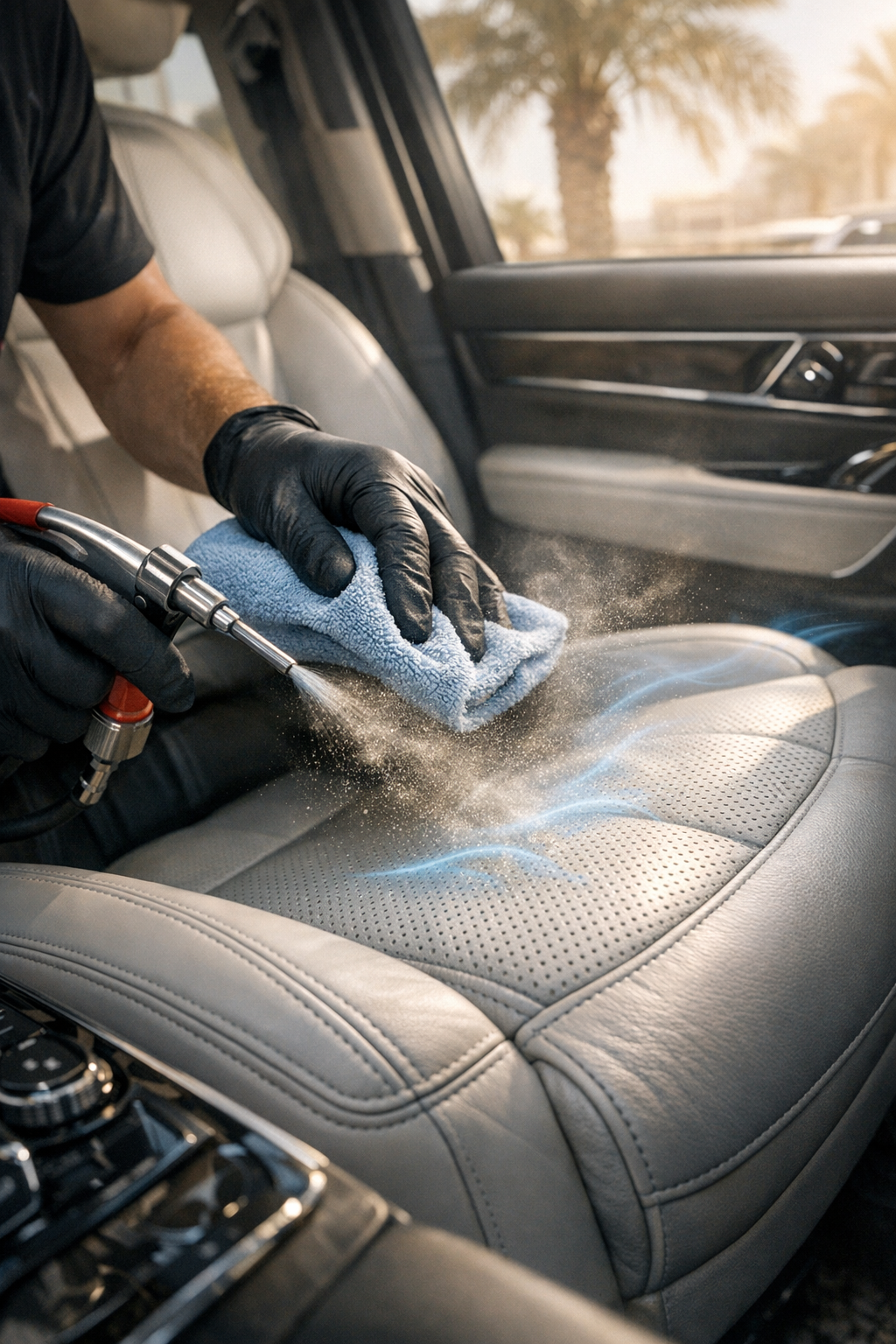
Hold a can of compressed air at a 45‑degree angle, approximately 15cm from the seat surface. Use short, controlled bursts—two to three seconds maximum—rather than sustained blasts. This dislodges particles trapped inside perforations without forcing them deeper into the seat foam.
Never use a high‑pressure shop compressor. Excessive force can damage the delicate internal fan blades beneath and push debris further into the ventilation channels.
Step 3: Clean the Leather Surface
Apply a pH‑balanced leather cleaner specifically formulated for perforated leather. Spray the product onto a soft microfibre cloth—never directly onto the seat—and wipe gently in straight lines following the leather grain. Avoid circular motions that push residue into holes.
For suedecloth inserts found on some Range Rover Sport and Velar models, use a dedicated Alcantara cleaner with a soft-bristled detailing brush using light, one‑directional strokes.
Step 4: Deep‑Clean Micro‑Perforations Without Damaging Leather
This step makes the biggest difference and is often skipped by general detailers unfamiliar with ventilated seats.
Dampen a clean microfibre cloth with distilled water and press it gently over a section of the seat while running the ventilation fans on the lowest setting. The suction from beneath pulls moisture and dissolved residue through the perforations from the sitting surface downward, effectively flushing each hole without oversaturating the seat foam.
Work in small sections—roughly 15cm squares—and use a fresh area of the cloth for each pass. Once you have covered the entire seat, switch the ventilation to maximum and let the fans run for five minutes to dry the internal channels.
This technique restores airflow noticeably after a single session.
Step 5: Condition and Protect the Leather
Once the surface is completely dry, apply a thin layer of non‑greasy leather conditioner. Choose products explicitly labelled safe for perforated leather. Thick balms or wax‑based conditioners will block airflow immediately and undo your cleaning work. A light, water‑based conditioner absorbs into the leather without leaving residue inside the perforations.
If airflow stays weak after completing these steps, the issue likely sits beneath the surface. Book professional Range Rover seat ventilation repair in Dubai with Euro Expert.
Range Rover Seat Vent Fans and Filters: When to Get Service in Dubai
Beneath your seats, small centrifugal fans and, on certain models, charcoal or mesh filters work continuously during operation. Over time these components accumulate dust and lose efficiency, especially in the UAE’s sand‑heavy environment.
Signs that your sub‑seat ventilation hardware needs professional attention include:
- Reduced airflow despite clean perforations
- Unusual buzzing or rattling sounds
- Uneven cooling across the seat surface
- Fans that cycle on and off intermittently
Accessing these components requires partial seat disassembly—disconnecting wiring harnesses, removing seat rails, and navigating the electronics that control heating, cooling, and memory positions. This is not a DIY task for most owners.
The technicians at Euro Expert in Dubai specialise in Range Rover seat ventilation systems. They can inspect and service sub‑seat fans, replace worn motors, clean or replace filters, and check electrical connections for corrosion caused by the Gulf’s high humidity. If your ventilated seats are underperforming despite regular surface cleaning, schedule an inspection with Euro Expert.
UAE Maintenance Schedule: Weekly, Bi‑Weekly, Monthly
| Task | Frequency |
|---|---|
| Surface vacuuming with soft brush attachment | Weekly |
| Compressed air cleaning of perforations | Bi‑weekly |
| Full leather cleaning and perforation flush | Monthly |
| Leather conditioning | Monthly (after cleaning) |
| Professional fan and filter inspection | Every 12 months or 15,000 km, whichever comes first |
Drivers who park outdoors regularly or frequently travel on desert roads may need to increase the compressed air step to weekly.
Tips Specific to UAE Range Rover Owners
- Always run ventilated seats for two to three minutes before sitting down after the car has been parked in direct sun. This clears hot stagnant air from the seat foam and reduces the thermal shock on leather.
- Use a windshield sunshade and rear privacy shades to limit cabin temperature buildup, which reduces the load on seat ventilation fans when you start driving.
- Keep a small handheld vacuum in your boot for quick sand removal after beach trips or desert excursions.
- Avoid applying heavy moisturisers or sunscreen immediately before driving. If unavoidable, place a thin breathable seat cover over the perforated surface for that journey and remove it afterward.
Final Thoughts
Your Range Rover’s ventilated seats were engineered to deliver comfort in extreme climates, but they were not designed to be maintenance‑free in one of the dustiest environments on earth. A consistent cleaning routine takes just 20–30 minutes per month and preserves the cooling performance that makes UAE summers bearable behind the wheel.
Stay proactive, use the right products, and partner with qualified specialists when deeper service is needed. For professional Range Rover ventilated seat service in Dubai, contact Euro Expert today.
Frequently Asked Questions
How do I unclog perforated leather seats in a Range Rover?
Vacuum the surface with a soft brush, use short bursts of compressed air at 15cm distance, apply a pH‑balanced leather cleaner with a microfibre cloth, then flush perforations by pressing a damp cloth over the surface while running the seat fans on low.
Is compressed air safe for Range Rover ventilated seats?
Yes, when used in short bursts from approximately 15cm away. Avoid high‑pressure shop compressors, which can damage internal fan blades and force debris deeper into the ventilation channels.
How often should I clean ventilated seats in Dubai?
Vacuum weekly, use compressed air bi‑weekly, and perform a full perforation flush with leather cleaning monthly. The UAE’s sand and sweat buildup demands more frequent maintenance than temperate climates.
What products are safe for perforated leather?
Use a pH‑balanced leather cleaner designed for perforated surfaces and a non‑greasy, water‑based leather conditioner. Avoid wax‑based balms, thick creams, or any product that could fill or seal the micro‑perforations.
When should I service Range Rover seat ventilation fans?
If airflow feels uneven, weak, or noisy after thorough surface cleaning, the sub‑seat fans or filters likely need professional attention. Schedule an inspection with a Range Rover specialist in Dubai such as Euro Expert for diagnosis and repair.