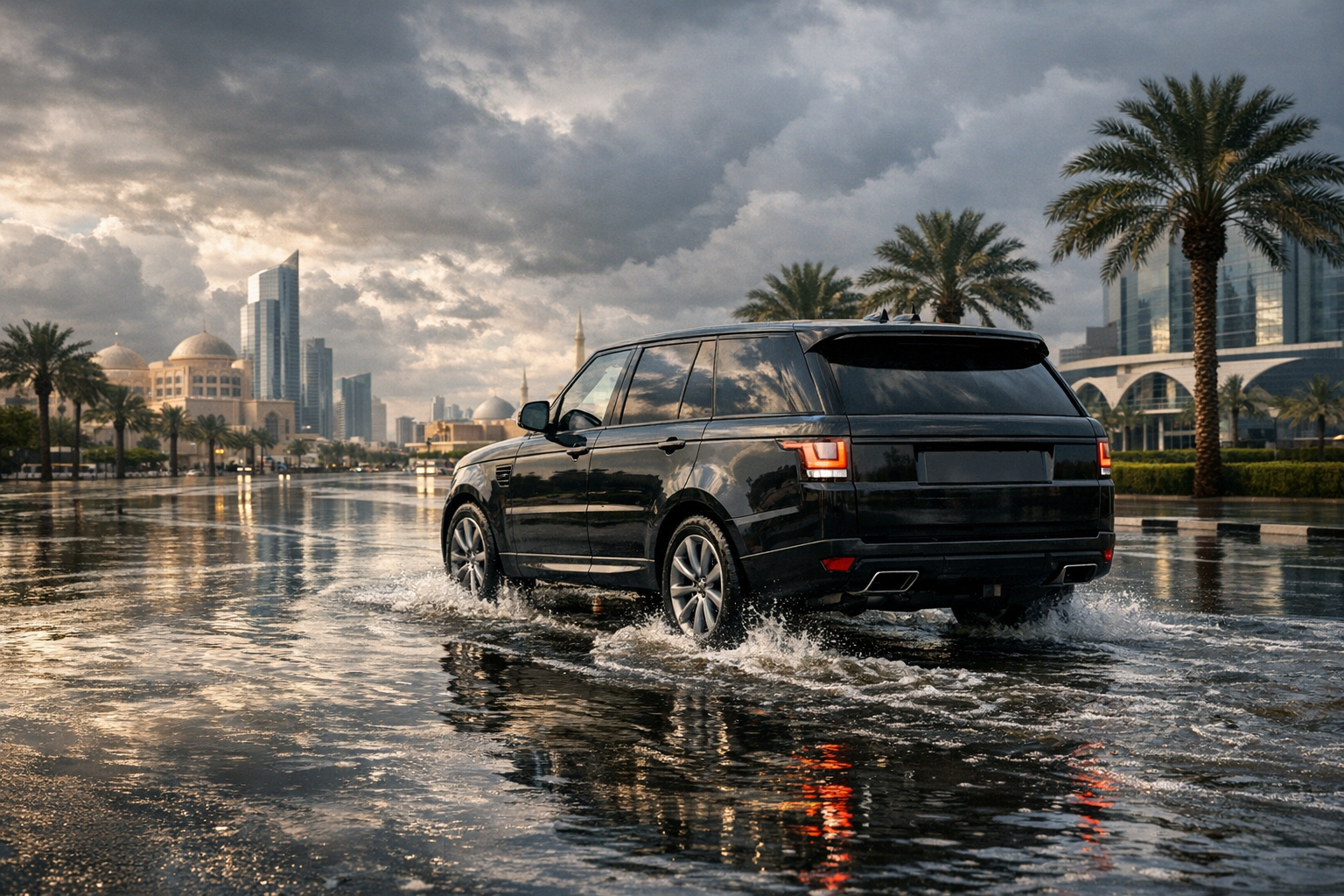
Planning desert drives in Dubai or Abu Dhabi? This UAE-ready Range Rover off-road recovery kit covers exactly what to carry, how to use it, and where to stow it so you’re never stranded when the sand gets soft or the wadi gets rough.
From Al Qudra and Sweihan to Liwa and Hatta, this 4×4 recovery gear checklist is tailored to a full-size Range Rover in UAE sand and wadi terrain. Whether you’re crossing dunes near Fossil Rock, navigating the rocky wadis of Ras Al Khaimah, or exploring a remote desert track on a Friday morning, your Range Rover is built for the challenge—but even the most capable vehicles need the right recovery equipment when conditions turn unforgiving.
Carrying the right recovery kit—sized specifically for your Range Rover’s considerable weight—isn’t optional in the UAE’s backcountry. It’s essential.
Range Rover Off-Road Recovery Kit: UAE Essentials
1. Kinetic Recovery Rope (Snatch Strap) for Range Rover
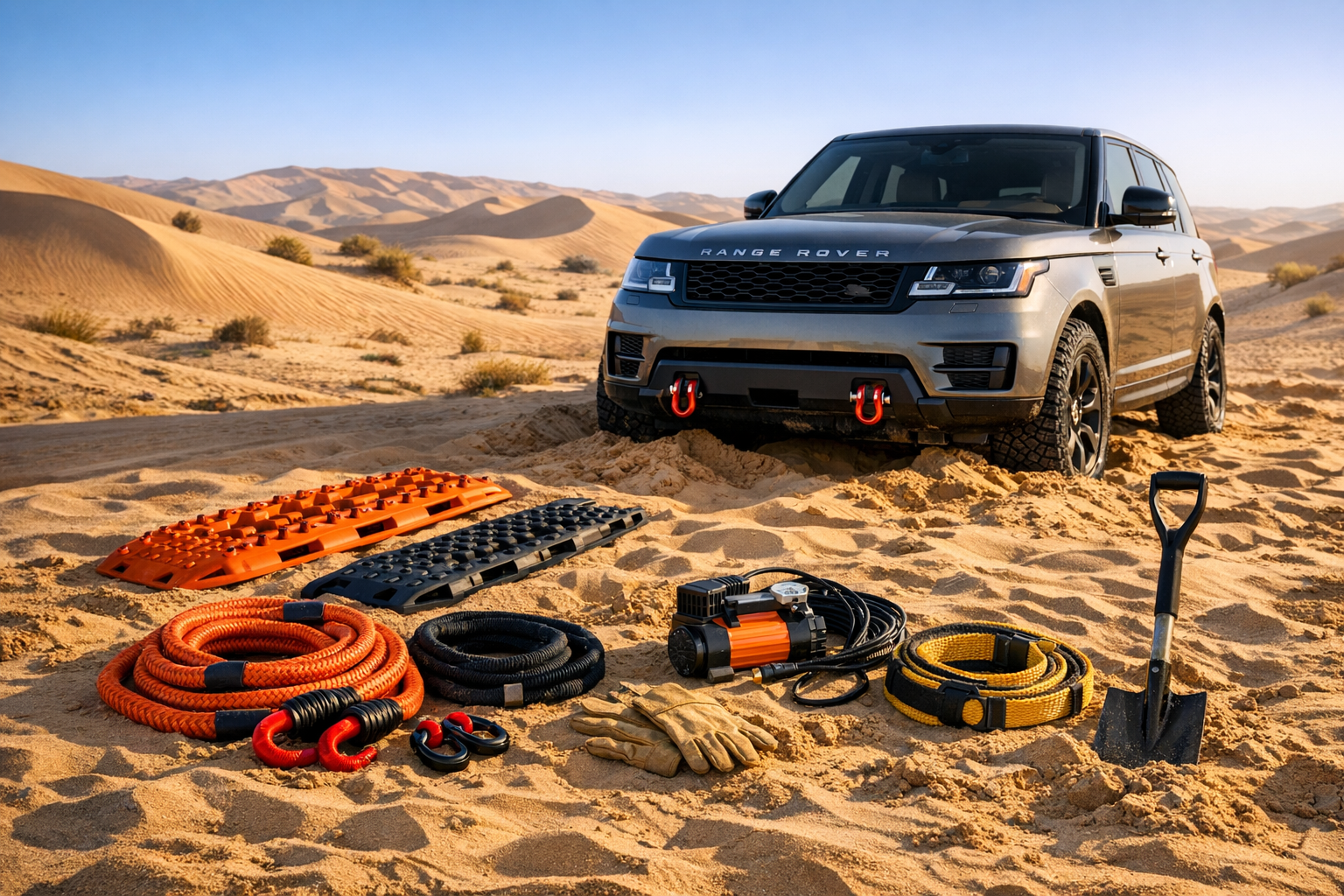
A kinetic rope is the single most important recovery tool you can own. Unlike a static tow strap, it stretches under load, storing energy and allowing a recovering vehicle to pull you free with a smooth, progressive force rather than a sudden jolt. For desert driving in Dubai and across the UAE, this is the item that gets used most often.
- Size it to 2.5–3× GVW (Range Rover ~2,800 kg → 8,000–11,000 kg MBS; 9 m length).
- Connect only to rated recovery points (never a tow ball); add a damper mid-line.
- Clear the area of all bystanders; build gentle momentum for a progressive pull.
2. Rated Shackles (Bow or Soft Shackles)
You’ll need at least two bow shackles (also called D-shackles) rated to 4.75 tonnes or higher to connect your recovery rope to your vehicle’s recovery points. Soft shackles are a lighter, safer alternative that eliminates metal-to-metal risk.
- Use rated 4.75 t (or higher) bow shackles; consider soft shackles for lighter, safer links.
- Hand-tighten then back off a quarter-turn to prevent seizing under load.
- Inspect pins, threads, and rating stamps before every use; retire any shackle with cracks or wear.
3. Tyre Deflator and Portable Compressor
Lowering your tyre pressure is the first and most effective step when driving on sand. Dropping from highway pressure dramatically increases your tyre’s footprint, helping you float over soft surfaces rather than digging in.
For UAE desert driving (Dubai, Abu Dhabi, Al Ain, Liwa), start at 15–18 PSI on a full-size Range Rover and adjust slightly for load and sand softness.
- Drop to 15–18 PSI for sand; reinflate to road spec before returning to tarmac.
- Choose a compressor with a duty cycle that won’t overheat on 4 large tyres (look for models rated for 35-inch tyres or larger).
- Check pressures evenly across all four tyres; carry spare valve cores and fuses for the compressor.
A set of rapid deflators saves time and ensures consistent pressure across all wheels.
4. Traction Boards
When you’re alone and there’s no second vehicle to pull you out, traction boards are your best friend. Place them under the driven wheels to provide a solid surface for your tyres to grip. They’re lightweight, virtually indestructible, and work in both sand and mud—making them essential 4×4 recovery gear for the UAE.
- Clear sand away from tyres first, seat boards firmly against the tread, and accelerate smoothly—no wheel spin.
- Stow where you can reach them even if the boot is jammed or buried by sand.
5. Long-Handled Shovel
Sometimes the simplest tool is the most effective. A sturdy, full-length off-road shovel lets you clear sand from around your tyres, dig out a buried chassis, or flatten a path ahead.
- Dig a ramp in front of the tyres; clear sand from under the chassis and axles.
- Prioritise a long handle and sturdy blade over compact folding models—camp shovels are too small for serious recovery work.
6. Basic Tool Kit and First Aid
In remote areas of the UAE—whether deep in Liwa or high in the Hatta mountains—you may be far from help. A well-stocked tool kit and first aid kit round out your off-road recovery gear.
- Pack spanners, sockets, zip ties, duct tape, spare fuses, work gloves, and a headlamp.
- Keep a comprehensive first aid kit easily accessible, not buried under camping gear.
Where to Stow Your Range Rover Recovery Kit
The Range Rover’s generous boot space makes storage straightforward. A dedicated cargo box or heavy-duty bag keeps everything organised and prevents items from rattling around. Mount your shovel and traction boards on the rear door, roof rack, or along the boot’s sidewalls. Keep your compressor accessible—you’ll use it every trip.
The key principle: your recovery gear should be reachable even when the vehicle is fully loaded for a weekend desert adventure.
Keep Your Range Rover Recovery-Ready
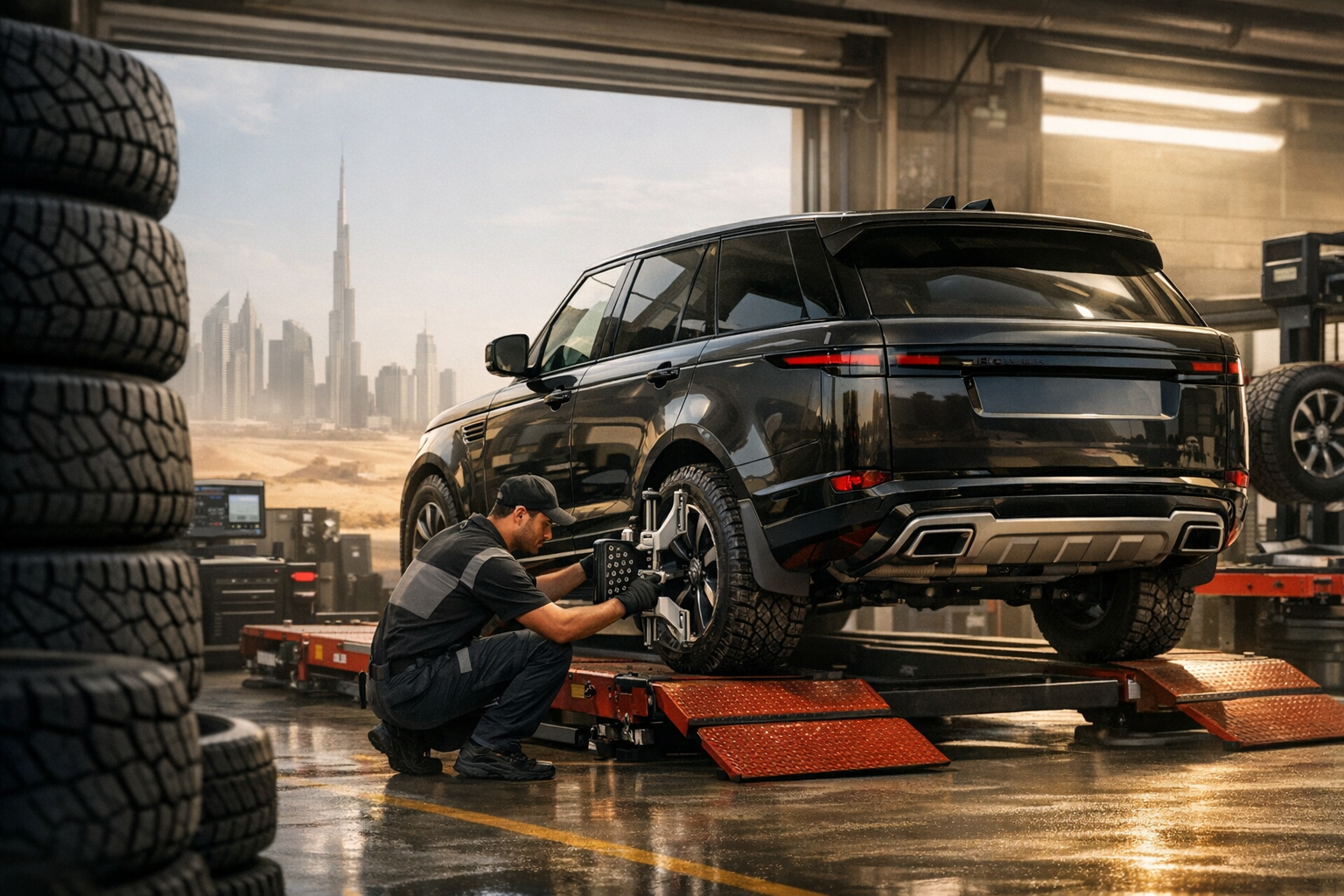
All the gear in the world won’t help if your vehicle isn’t mechanically prepared. Before any off-road outing, book a pre-trip inspection with Range Rover repair in Dubai specialists at Euro Expert to ensure your air suspension, differentials, cooling system, and electronics are desert-ready.
Regular servicing tailored to the demands of sand and wadi driving prevents breakdowns in places where a recovery truck can’t easily reach you.
Final Thought
The UAE’s landscape offers some of the most rewarding off-road driving anywhere on earth. With the right recovery kit stowed in your Range Rover—and the knowledge to use it safely—you can explore with confidence, knowing that getting stuck is just a brief pause in the adventure, not the end of it.
Prepare well, drive responsibly, and enjoy the journey. For expert Range Rover repair in Dubai and desert-prep checks, schedule a visit with Euro Expert.
Frequently Asked Questions
What tyre pressure should I run in UAE sand with a Range Rover?
Start at 15–18 PSI. For heavy loads or soft Liwa sand, you may go slightly lower, but always reinflate before tarmac to avoid heat buildup and sidewall damage.
What size kinetic rope do I need for a Range Rover?
Choose a rope rated to 2.5–3× your GVW (around 8,000–11,000 kg minimum breaking strain) and about 9 m long for desert recoveries.
Can I recover using a tow ball?
No. Tow balls can shear under recovery loads and become deadly projectiles. Use only factory-rated recovery points with rated shackles.
Are soft shackles safe for recoveries?
Yes, when rated correctly. They’re lighter and reduce metal-to-metal risk. Inspect for abrasion before each use and retire immediately if damaged.
Where are the factory recovery points on a Range Rover?
Front and rear recovery eyes are typically located behind trim covers on the bumpers. Check your owner’s manual for exact locations and load ratings. Never attach recovery equipment to suspension arms or the tow ball.