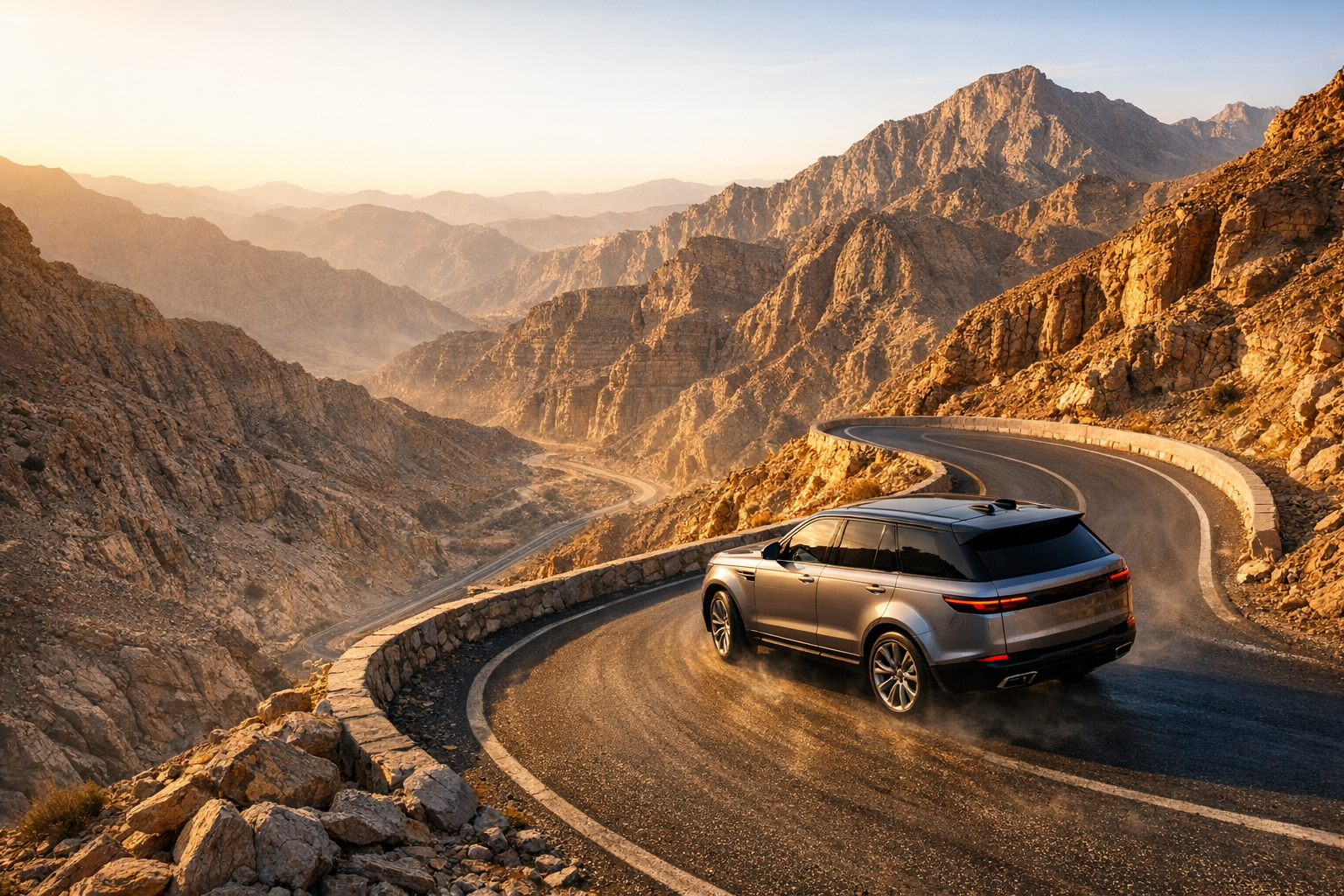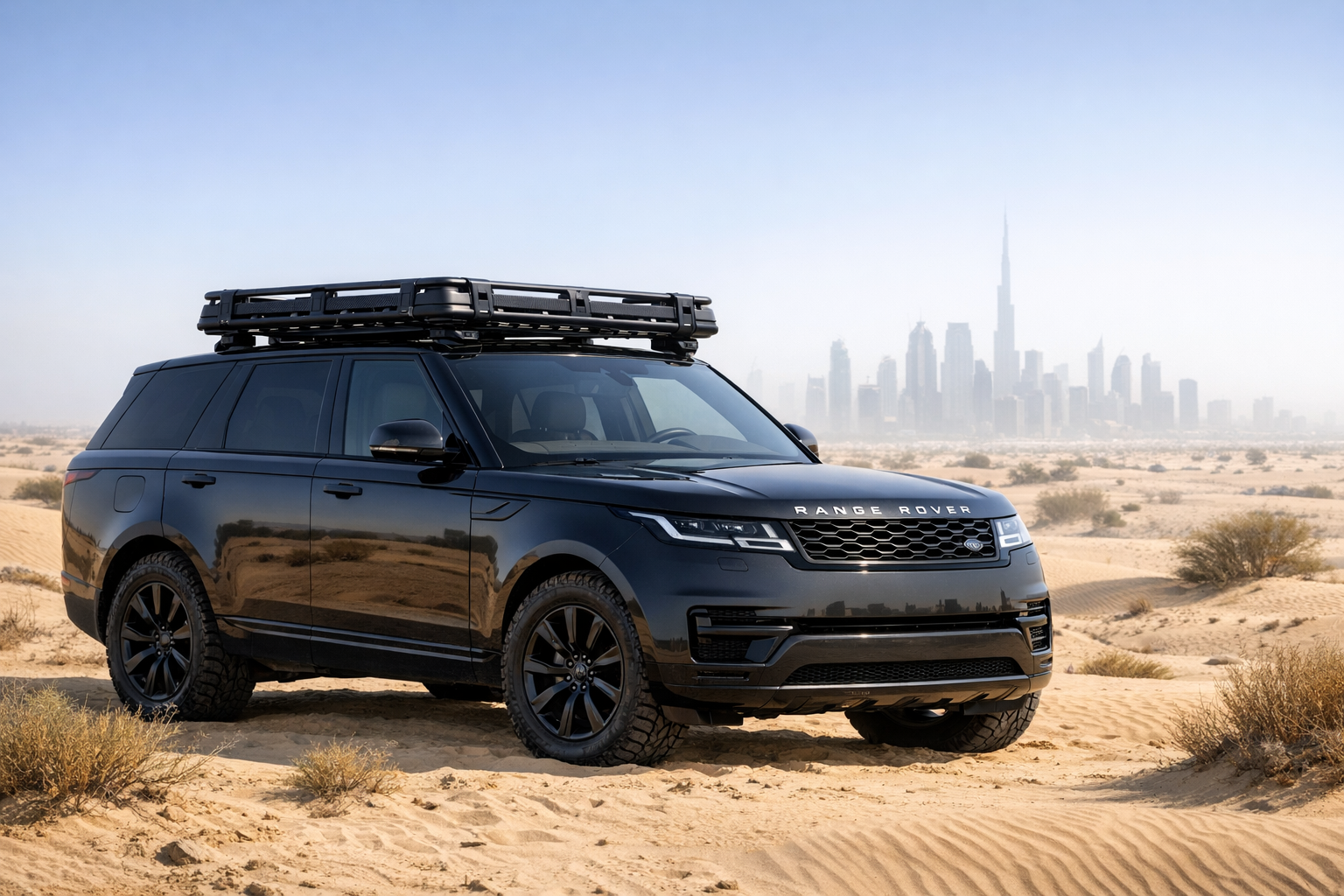
Whether you’re packing for a weekend in the Liwa dunes or hauling gear across Abu Dhabi, a roof rack or cargo system transforms your Range Rover into a true expedition vehicle. But the UAE’s extreme heat, high-speed motorways, and fine desert sand create challenges you won’t find in European owner’s manuals. Here’s what you need to know before bolting anything to your roof.
If you need professional guidance on roof-rail compatibility, torque specs, or load distribution before installing a Range Rover roof rack in the UAE, book with Euro Expert for Range Rover repair in Dubai. Their team works exclusively with European marques and understands Land Rover roof structures inside and out.
Dynamic vs Static Roof Load Limits for Range Rover in Dubai
Every Range Rover has two roof-load figures that matter:
- Dynamic load rating – the maximum weight allowed on the roof while the vehicle is moving. For a Range Rover Sport, Vogue, or Velar roof load, this sits between 75 kg and 100 kg, including the weight of the rack itself.
- Static load rating – the weight the roof can support when parked, relevant if you plan to mount a rooftop tent. The rooftop tent load rating is typically two to three times the dynamic figure, meaning 150–300 kg depending on the model.
A common mistake is ignoring rack weight. A full-size steel platform can weigh 25–30 kg on its own, leaving you only 50–70 kg for actual cargo. Aluminium platforms cut that penalty in half. For a Range Rover Sport roof rack in the UAE, keep total dynamic load—rack plus cargo—under 100 kg for safe highway use. Always check your specific model’s handbook—overloading stresses roof rails, deforms mounting points, and can void your warranty.
Heat-Resistant Roof Rack Materials for UAE Summers
Summer surface temperatures on a parked car in Dubai regularly exceed 80 °C. Material choice matters more here than almost anywhere else, making the right cargo box and rack selection critical for UAE heat conditions.
- T6 aluminium – lightweight, corrosion-resistant, and won’t warp in sustained heat. The go-to choice for platforms, crossbars, and roof rails in Dubai.
- UV-stabilised polymer fittings – standard rubber feet and plastic clamps degrade quickly under Gulf UV. Look for components rated to at least 110 °C continuous exposure.
- Stainless hardware A2/A4 – regular zinc-plated bolts corrode fast in the coastal humidity of Dubai and Abu Dhabi. A2 or A4 stainless steel fasteners throughout the system prevent seized threads and structural weakening over time.
Cargo boxes present an additional concern: dark-coloured ABS shells absorb heat aggressively. A cargo box in UAE heat performs far better in light-grey or silver with internal ventilation ridges—protecting sensitive gear where a gloss-black alternative would turn into an oven.
Cut Wind Noise and Fuel Use at 120–140 km/h
At 120–140 km/h on Sheikh Zayed Road or the E11, aerodynamic drag from a roof system becomes significant. Highway noise at 120–140 km/h is one of the most common complaints from Range Rover owners who fit aftermarket racks. Expect:
- A 5–15 % increase in fuel consumption with an empty flat rack, rising to 20 %+ with a loaded cargo box.
- Noticeable wind noise at speeds above 100 km/h, especially with crossbars that have a round or square profile.
To minimise both problems:
- Choose aero crossbars with a teardrop or wing-shaped profile rather than square or round tubes. Quality aero crossbars virtually eliminate the whistling that round bars create at motorway speeds.
- Remove crossbars or the entire rack when not in use—the five minutes it takes pays for itself at the pump.
- Fit a wind fairing at the leading edge of any platform rack. A properly sized wind fairing deflects air over the cargo and quiets cabin noise considerably, making a dramatic difference on long UAE highway drives.
Safe Tie-Downs for Desert Trips in Abu Dhabi
Sand tracks, dune crossings, and corrugated gravel roads vibrate cargo loose faster than tarmac ever will. Desert off-road tie-downs need to be more robust than anything you’d use for city driving. Follow these rules:
- Use ratchet straps rated to at least twice your cargo weight—cam buckle straps slip under repetitive vibration.
- Attach straps to dedicated tie-down loops on the rack, never to the roof rails themselves.
- Carrying recovery boards? Mount them vertically on the rack’s side panels with purpose-built brackets rather than bungee cords.
- Re-check every strap at fuel stops. Heat cycling loosens synthetic webbing throughout the day, and UAE daytime temperature swings can be dramatic even over a few hours.
Installation and Professional Fitting
Correct installation is non-negotiable. Poorly torqued bolts, misaligned crossbars, or incompatible mounting feet can damage your Range Rover’s aluminium roof structure—a costly repair that often runs into thousands of dirhams. If you’re unsure about compatibility or fitting, have the system installed and inspected by specialists who understand Land Rover engineering.
The team at Euro Expert for Range Rover repair in Dubai can verify roof-rail compatibility, correct torque, and load distribution for UAE conditions. They’ll ensure your rack integrates properly with your vehicle’s existing roof-rail system and that no mounting points are compromised before your first highway drive.
Final Checklist
| Item | Recommendation |
|---|---|
| Rack material | T6 aluminium with stainless hardware |
| Crossbar profile | Aero/wing-shaped |
| Cargo box colour | Light silver or grey |
| Fastener grade | A2/A4 stainless steel |
| Strap type | Ratchet, rated 2× cargo weight |
| Professional check | Before first highway drive |
FAQ: Range Rover Roof Racks in the UAE
What is the Range Rover roof load limit in the UAE?
Most Range Rover models—including the Sport, Vogue, and Velar—allow 75–100 kg dynamic load including the rack itself. Static limits for parked use are roughly 2–3× that figure, typically 150–300 kg.
Which roof rack material is best for Dubai heat?
T6 aluminium with UV-stabilised fittings and A2/A4 stainless hardware. This combination resists warping at 80 °C+ surface temperatures and won’t corrode in coastal humidity.
How do I reduce roof rack wind noise at 120–140 km/h?
Use aero crossbars with a wing-shaped profile, add a front wind fairing to deflect airflow over cargo, and remove bars entirely when not in use. These three steps eliminate most highway noise complaints.
Can I use a rooftop tent on a Range Rover?
Yes, if total weight stays within the vehicle’s static roof rating and the rack itself is rated for tent use. Confirm both the vehicle’s static limit and the rack manufacturer’s tent-load rating before purchasing.
Do I need professional fitting for roof rails in Dubai?
It’s strongly recommended. Incorrect torque or misaligned mounting feet can damage the aluminium roof panel permanently. A specialist inspection before your first highway drive ensures safety and protects your warranty.
A well-chosen roof system extends your Range Rover’s versatility without compromising safety or comfort. Take the time to match materials and ratings to the UAE’s unique conditions, and your setup will serve you reliably from city commutes to deep-desert adventures. For expert fitting, torque verification, and roof-rail inspection, contact Euro Expert for Range Rover repair in Dubai—the specialists who know Land Rover engineering and Gulf conditions equally well.