Driving a Range Rover in Dubai? With summer asphalt near 70°C, the right tyre pressure is the difference between confident control and costly wear. Whether you own a Range Rover Sport, Vogue, Velar, or Evoque, managing hot weather tyre pressure in the UAE requires more than a quick glance at the dashboard. Here’s everything you need to know about cold vs hot PSI, TPMS resets, and when to adjust for highways, heavy loads, or sand driving near Dubai.
For Range Rover Sport and Vogue owners in Dubai and Abu Dhabi, cold tyre (tire) pressure accuracy is critical. Get it wrong, and you’re looking at uneven wear, compromised handling, and shorter tyre life in conditions that already push rubber to its limits.
At-a-Glance: Range Rover Tyre Pressure Checklist for UAE
- Morning cold check: before sunrise or after 3+ hours parked in shade
- Hot vs cold difference in UAE summer: typically +6–8 PSI (+0.4–0.55 bar)
- Motorway/heavy load: add +2–4 PSI (+0.15–0.3 bar) to rears
- Sand driving: drop to 20–22 PSI (≈1.4–1.5 bar); reinflate before tarmac
- Typical placard example: ~36 PSI (≈2.5 bar) when cold
If you’re unsure about your current pressures or suspect uneven wear, the specialists at Range Rover repair in Dubai at EuroExpert can inspect and calibrate everything in a single visit.
Cold vs Hot PSI in Dubai’s Summer
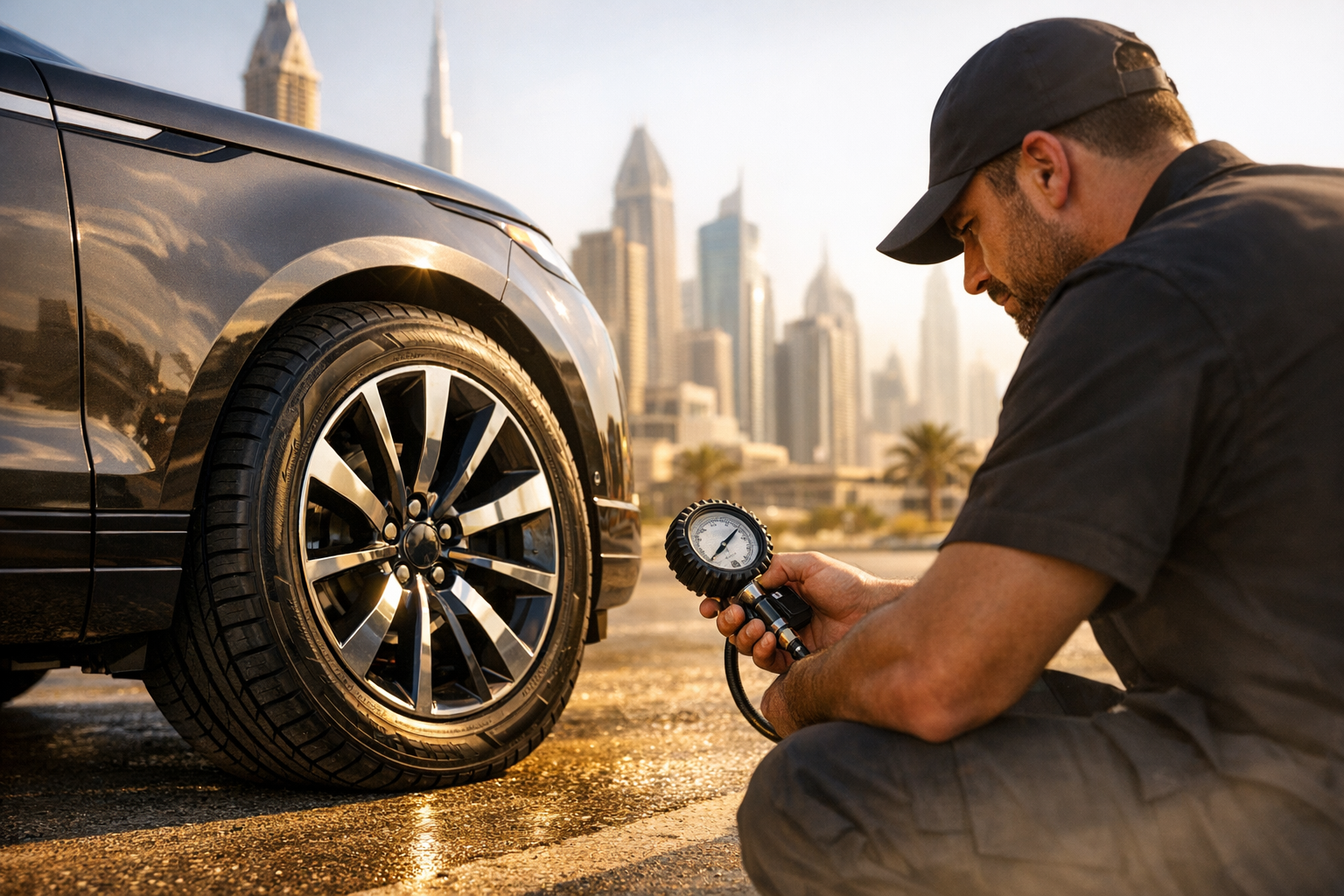
Every Range Rover has a recommended tyre pressure on the driver’s door jamb. That figure always refers to cold pressure—measured when the vehicle has been parked for at least three hours or driven less than two kilometres.
In moderate climates, the difference between cold and hot readings might be 3–5 PSI. In the UAE, that gap widens to 6–8 PSI or more during peak summer. This matters because:
If you set pressures when tyres are hot, you’ll end up under-inflated once they cool. Under-inflation causes excessive sidewall flex, accelerated edge wear, and higher fuel consumption.
If you top up to the recommended cold figure on an already-hot tyre, you’re running below specification once everything cools overnight.
The golden rule for Range Rover tyre pressure in the UAE: check and adjust early in the morning before driving, or after the car has rested in shade for at least three hours. For Dubai residents, this often means stepping out before sunrise or using a shaded garage.
TPMS Reset: Range Rover How-To
Modern Range Rovers use a direct Tyre Pressure Monitoring System with sensors inside each wheel. These relay real-time pressure and temperature data to the infotainment screen. A few important points:
The warning threshold sits around 25% below recommended pressure. You could be running 5–7 PSI low before the dashboard alerts you. Don’t rely solely on the TPMS warning light—by the time it triggers, tyre integrity and handling are already compromised.
Heat-induced pressure rises won’t trigger a high-pressure alert on most models. The system warns about under-inflation, so a tyre sitting at 42 PSI when the placard says 36 PSI won’t flag a warning during a hot afternoon drive on Sheikh Zayed Road.
How to reset TPMS on a Range Rover: After inflating to your target cold PSI, navigate to the vehicle settings menu on the infotainment screen and select the TPMS calibration or reset option. This tells the system to learn your new baseline rather than referencing outdated figures. Recalibrate every time you adjust pressures or rotate tyres.
Highway PSI: When to Adjust Beyond the Placard
The door jamb figure works for standard conditions, but UAE driving often demands adjustments.
Heavy loads and long motorway drives
Loading up for a road trip to Abu Dhabi, Al Ain, or Oman? Increase rear pressures by 2–4 PSI above the standard recommendation. Range Rover models carry significant kerb weight already, and additional passengers or luggage amplify heat buildup in rear tyres at sustained highway speeds.
Off-road sand pressure near Dubai
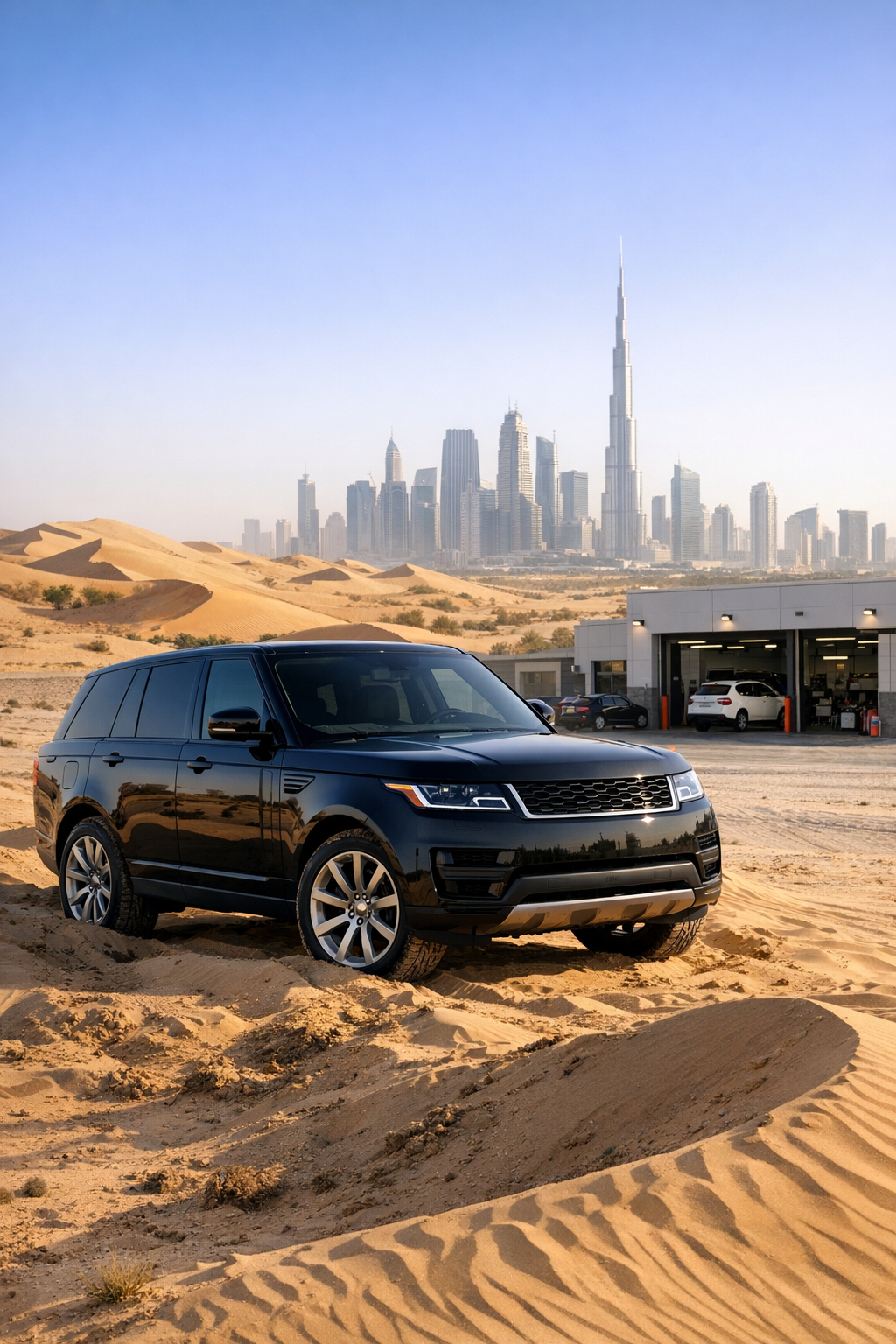
Heading to the desert for a weekend drive? Dropping to 20–22 PSI (≈1.4–1.5 bar) improves sand traction dramatically. Always reinflate to road specifications before returning to tarmac. Driving on hard surfaces with deflated tyres damages sidewalls and risks bead separation.
Seasonal changes in the UAE
Revisit your pressures when transitioning between summer and the cooler months from November through February. Lower ambient temperatures mean less natural pressure rise during driving, so your cold figure becomes closer to your actual running pressure throughout the day.
Practical Habits for UAE Range Rover Owners
Invest in a quality digital gauge. Pencil-type gauges lose accuracy in extreme heat. A digital gauge with 0.5 PSI resolution gives reliable readings whether you drive a Velar, Evoque, Sport, or full-size Vogue.
Check weekly, not monthly. Dubai heat cycling causes more frequent micro-losses through valve stems and tyre beads than cooler climates.
Inspect valve caps regularly. Sand and dust degrade rubber seals faster in the UAE than almost anywhere else on earth.
Schedule professional inspections. A qualified technician spots uneven wear patterns, sidewall stress marks, or slow leaks that home checks miss. In Dubai, book a same-day tyre pressure and TPMS check at EuroExpert—Range Rover specialists who understand UAE heat.
Frequently Asked Questions
What is the correct tyre pressure for a Range Rover in Dubai summer?
Use the door-jamb cold PSI, which is often around 36 PSI (2.5 bar) depending on your model. Always check before driving in the morning. Expect readings to climb 6–8 PSI higher when hot after a summer drive.
Should I set tyre pressure at a petrol station when tyres are hot?
No—always set when cold for accuracy. If you must adjust at a petrol station after driving, add 3–4 PSI above the placard figure to compensate, then recheck and correct the next morning when tyres are cold.
How do I reset TPMS on a Range Rover?
After inflating all tyres to the correct cold PSI, go to vehicle settings on the infotainment screen and select the TPMS calibration option. The system will learn the new baseline over a short drive. This applies to Range Rover Sport, Vogue, Velar, and Evoque models.
What PSI for sand driving near Dubai?
Drop to 20–22 PSI (≈1.4–1.5 bar) for improved flotation on soft sand. Reinflate to your road specification—typically 36 PSI or as stated on your door jamb—before returning to highways.
Does hot weather tyre pressure affect fuel economy?
Yes. Under-inflated tyres increase rolling resistance. In UAE summer heat, a tyre that appears correct when hot may actually be 6–8 PSI below spec when cold, costing you fuel efficiency and accelerating wear.
The Bottom Line
Range Rover tyre pressure management in the UAE isn’t a set-and-forget task. Dubai heat creates a constantly shifting variable that demands weekly attention. By checking cold, understanding your TPMS limitations, and adjusting for load and conditions, you’ll enjoy a safer drive, a smoother ride, and significantly longer tyre life.
Need a professional assessment? The team at Range Rover repair in Dubai at EuroExpert handles tyre pressure calibration, TPMS diagnostics, and full suspension inspections for every Range Rover model on UAE roads. Book a same-day appointment and drive with confidence.